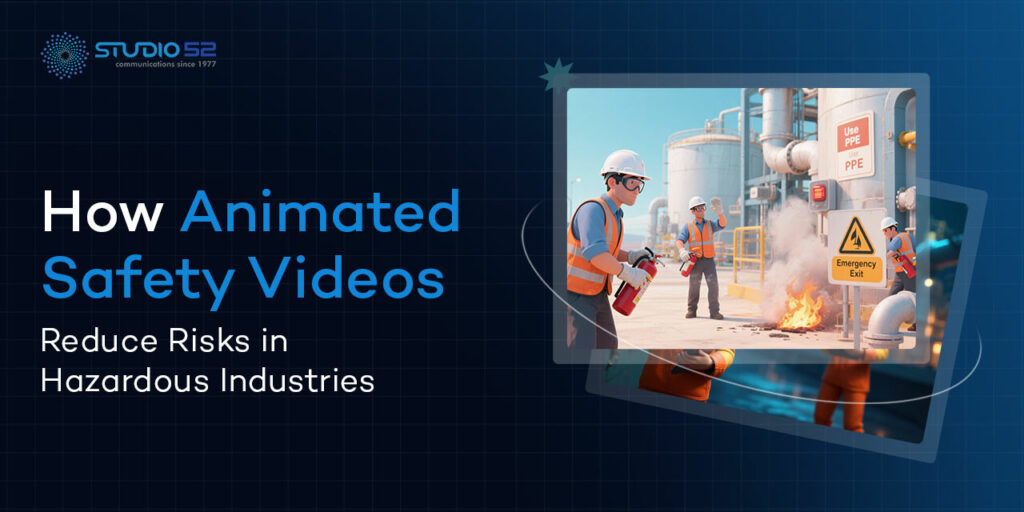

Animated safety videos revolutionize hazardous industry training through visual storytelling that improves knowledge retention by 65%. These engaging tools demonstrate complex procedures, simulate dangerous scenarios safely, and overcome language barriers—reducing workplace accidents while ensuring consistent, scalable safety communication across global operations.
Workplace safety in hazardous industries demands more than traditional training manuals and static presentations. With workers facing life-threatening risks daily across oil rigs, construction sites, chemical plants, and manufacturing facilities, organizations need communication tools that capture attention, ensure comprehension, and drive behavioral change.
Animated safety videos have emerged as transformative solutions that address the critical gaps in conventional safety training. Through visual storytelling, these dynamic tools demonstrate complex procedures, simulate dangerous scenarios without real-world risks, and overcome language barriers that plague multinational operations. The result is measurably improved knowledge retention, reduced incident rates, and strengthened safety cultures across high-risk industries.
Table of Content
The Safety Challenge in Hazardous Industries
Hazardous industries face unique training challenges that traditional methods struggle to address effectively. Complex equipment operations require detailed understanding that text-based manuals cannot adequately convey. High-consequence environments where mistakes prove fatal demand training approaches that ensure complete comprehension before workers encounter real situations.
Statistical evidence reveals the urgency: industries implementing comprehensive visual training programs report accident reductions of 45-60% compared to text-only approaches. Knowledge retention rates improve from approximately 10% with reading alone to 65% when visual and auditory elements combine, according to learning science research.
Animated Safety Videos: The Smart Communication Revolution
Animated explainer videos transform abstract safety concepts into concrete, memorable visual experiences that workers retain and apply in critical situations. Unlike live-action footage constrained by filming logistics and safety considerations, animation enables demonstration of dangerous scenarios, equipment malfunctions, and emergency procedures without exposing anyone to actual hazards.
Key Advantages of Animation for Safety Training
Visual Clarity: Animation simplifies complex machinery operations, chemical processes, and emergency procedures through clear, step-by-step visual representation that eliminates ambiguity. Technical details become accessible through controlled visual pacing and strategic highlighting of critical elements.
Scenario Simulation: Dangerous situations too risky to recreate in live training—explosions, equipment failures, toxic exposures—become safe learning experiences through animation. Workers witness consequences of incorrect procedures without anyone facing actual danger.
Universal Understanding: Visual communication transcends language barriers, making animated safety videos particularly valuable for multinational operations. While voiceovers and text can be translated, the visual narrative communicates core concepts universally.
Engagement and Retention: Dynamic animation captures attention more effectively than static presentations or text documents. Movement, color, and narrative structure activate cognitive processes that enhance memory formation and information retention.
Consistency and Scalability: Once produced, animated content delivers identical training experiences across all locations and time periods, eliminating variability inherent in human-delivered training. A single video can train thousands of workers with perfect consistency.
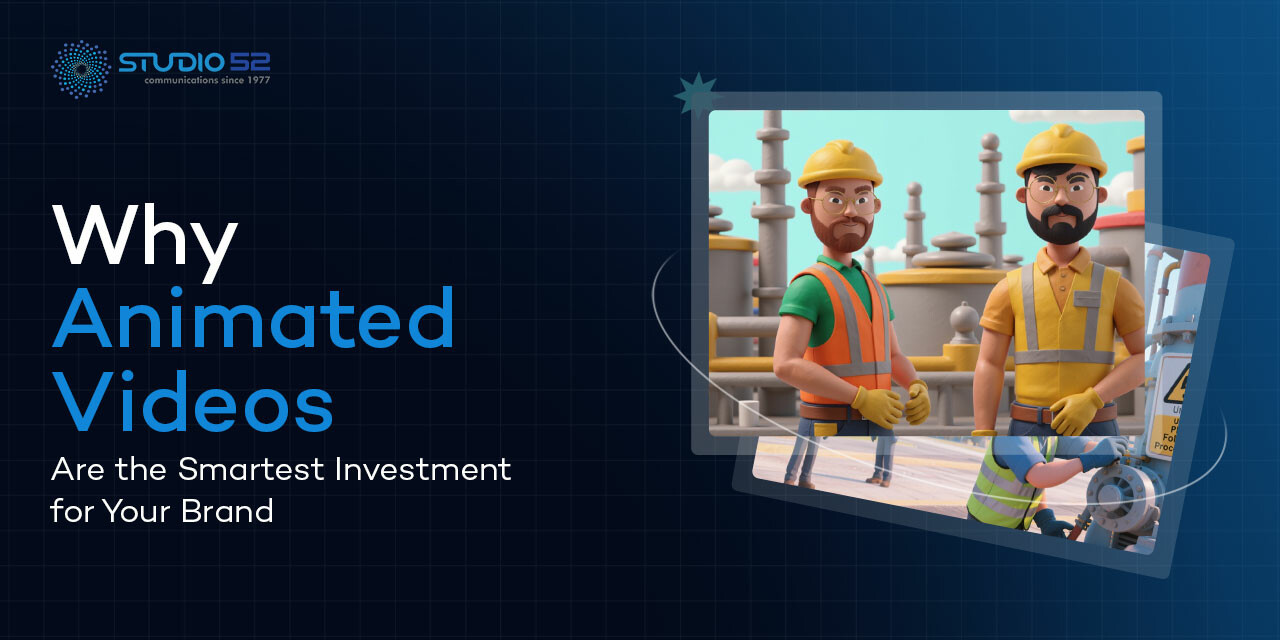
Want stronger engagement? Animated Videos Are the Smartest Investment for Your Brand. Our expert team creates compelling animations that simplify ideas, boost retention, and drive conversions. Connect with us today to begin crafting a video that delivers real impact.
The Business Value of Animation in Safety Training
Organizations implementing professional animated video production services realize substantial business benefits beyond basic safety improvements:
Reduced Training Costs: Initial investment in quality animation production generates long-term savings through elimination of repeated instructor travel, facility rental, and time away from productive work. A single animated module trains unlimited employees at minimal marginal cost.
Accelerated Onboarding: New employees reach operational competency faster through efficient visual learning that compresses training timelines without compromising comprehension. Reduced onboarding periods translate directly to improved productivity and lower labor costs.
Compliance Documentation: Professional animated safety content provides auditable training records demonstrating regulatory compliance. When incidents occur, organizations possess documented evidence of comprehensive safety training efforts.
Insurance Benefits: Many insurers offer premium reductions for organizations implementing advanced safety training programs. Documented commitment to worker protection through professional training content can significantly impact insurance costs.
Brand Reputation: Demonstrable investment in worker safety through quality training materials enhances corporate reputation with regulators, clients, investors, and prospective employees. Safety leadership becomes competitive advantage in talent acquisition and client relationships.
| Training Method | Knowledge Retention | Scalability | Cost Efficiency | Engagement Level |
| Text manuals | 10-15% | High | Low initial cost | Very Low |
| Instructor-led | 25-35% | Limited | High recurring | Moderate |
| Live-action video | 40-50% | High | Moderate | Moderate-High |
| Animated video | 60-75% | Very High | High long-term | Very High |
Real-World Applications: Animated Safety Videos in Action
Oil & Gas Industry
Offshore platforms utilize 3d animation video production to demonstrate emergency shutdown procedures, evacuation protocols, and equipment operation in harsh marine environments. Workers experience simulated blowout scenarios, fire response procedures, and man-overboard situations through immersive animation before encountering actual emergencies.
Complex drilling operations benefit from 3d video animation services that reveal internal equipment mechanisms, pressure dynamics, and failure modes invisible in real-world settings. This transparency enables operators to understand system behavior comprehensively, improving decision-making during abnormal situations.
Construction Industry
High-rise construction projects employ animated safety content showing fall protection systems, crane operation protocols, and confined space entry procedures. 2d animation explainer video formats effectively communicate site-specific hazards, PPE requirements, and emergency assembly points to diverse contractor teams.
Excavation and trenching operations use animation to demonstrate soil collapse mechanics, shoring requirements, and utility strike prevention—concepts difficult to convey through traditional training methods without creating actual dangerous conditions.
Chemical Manufacturing
Chemical plants leverage best 2d animation services to illustrate molecular-level reactions, exposure pathways, and containment strategies for hazardous substances. Animation enables workers to visualize invisible dangers like toxic gases, chemical burns, and reactive incompatibilities that text descriptions cannot adequately communicate.
Mining Operations
Underground mining operations use animation to show ground control principles, ventilation system functions, and escape route navigation. The ability to visualize mine layouts, strata conditions, and equipment positioning in three-dimensional animated space provides spatial understanding impossible to achieve through diagrams or verbal description.
Business Case Studies: Safety Animation Success
A multinational energy corporation implementing comprehensive animated safety videos across 47 global facilities reported 52% reduction in recordable incidents within 18 months. A construction consortium serving Middle East markets deployed multilingual animated safety content featuring culturally appropriate visual narratives. The initiative reduced language-related safety incidents by 73% while accelerating onboarding for the diverse expatriate workforce from 12 days to 6 days—delivering immediate labor cost savings exceeding the production investment within the first quarter.
Integrating Animated Safety Videos Into Corporate Systems
Maximizing safety animation video effectiveness requires strategic integration with existing training infrastructure and safety management systems:
Learning Management Systems (LMS): Embed animated content within corporate LMS platforms to enable tracking of completion rates, assessment scores, and recertification schedules. Integration ensures consistent deployment while generating compliance documentation automatically.
Mobile Accessibility: Optimize animated content for smartphone and tablet viewing, enabling field workers to access refresher training immediately before performing high-risk tasks. Just-in-time training accessibility reinforces proper procedures when most relevant.
Assessment Integration: Accompany animated modules with knowledge checks and practical assessments that verify comprehension. Testing ensures workers not only viewed content but understood critical concepts and can apply them correctly.
Continuous Improvement: Collect feedback on animated content effectiveness through worker surveys and incident analysis. Update animations based on near-miss investigations, regulatory changes, and operational modifications to maintain relevance and accuracy.
Overcoming Common Misconceptions About Animated Safety Videos
Misconception: “Animation is too simplistic for serious safety training.” Reality: Professional animation video production companies create technically sophisticated content appropriate for complex industrial applications. The medium’s flexibility enables detailed demonstration of intricate procedures while maintaining engagement.
Misconception: “Animated videos cost too much for our budget.” Reality: While quality production requires upfront investment, animated video production services deliver superior long-term ROI compared to repeated instructor-led sessions. Cost-per-trained-worker decreases dramatically as viewing audiences expand.
Misconception: “Workers prefer traditional training methods.” Reality: Surveys consistently show workers appreciate engaging visual content over dry presentations. Animation’s entertainment value doesn’t diminish learning effectiveness—it enhances it through improved attention and retention.
Misconception: “Animation cannot convey the seriousness of safety.” Reality: Thoughtfully designed animated content effectively communicates consequences and importance through appropriate tone, realistic scenarios, and clear demonstration of hazard severity. The medium doesn’t inherently trivialize content when executed professionally.
Safety Animation Videos in Training Programs are the fastest way to improve employee understanding and reduce workplace risks. Enhance your safety culture with clear, engaging animated training.
Emerging Technologies Powering Animated Safety Training
Virtual reality integration enables workers to experience animated safety scenarios in immersive 360-degree environments, adding kinesthetic learning dimensions that further improve retention and skill development.
Interactive animation allows viewers to make decisions within scenarios, experiencing consequences of choices in safe environments. This branching narrative approach develops critical thinking and decision-making skills applicable to real emergencies.
Choosing the Right Partner for Animated Safety Videos
Selecting an animation video production company requires evaluation of industry expertise, technical capabilities, and collaborative approach:
Industry Experience: Partners with proven track records in hazardous industry training understand regulatory requirements, technical accuracy needs, and effective communication approaches for industrial audiences.
Technical Capabilities: Comprehensive services spanning 2d animation explainer video and 3d video animation services enable optimal format selection for each training need. Technical versatility ensures visual approach matches content complexity.
Subject Matter Collaboration: Effective production companies work closely with client safety experts, incorporating technical review cycles that ensure accuracy while translating complex concepts into accessible visual narratives.
Compliance Knowledge: Understanding of international safety standards, regulatory requirements, and certification processes ensures produced content meets legal obligations while supporting audit and compliance needs.
Portfolio Quality: Review previous work samples to assess visual quality, technical accuracy, and engagement effectiveness. Strong portfolios demonstrate capability to deliver professional results matching your standards.
Conclusion
The evidence is overwhelming: animated safety videos represent essential investments for hazardous industries committed to worker protection and operational excellence. Through superior engagement, universal understanding, and consistent delivery, animation addresses fundamental training challenges that traditional methods cannot overcome.
Ready to revolutionize your safety training program? Studio52 delivers world-class animated safety videos that combine technical precision with engaging storytelling.