

Access our Guide to Workplace Safety to improve employee safety training, reduce workplace hazards, ensure regulatory compliance, and boost productivity. Start building a safer, compliant, and efficient work environment today.
Most workplace incidents involving new employees do not happen because people ignore safety rules. They happen because everything is unfamiliar and no one slows things down enough in the beginning. Safety orientation videos help close that gap by showing how safety actually works before habits form. Across UAE, Saudi Arabia, and Oman, organizations use safety orientation videos to reduce early incidents, improve understanding, and make safety clear from the very first day.
Have you ever really paid attention to how a new employee behaves in their first few days? They listen carefully, they nod, and they try to follow instructions, but most of their learning happens silently. They observe how people work, how rules are followed, and what happens when something goes wrong. This is where Safety Video Production plays a vital role by delivering clear, consistent safety guidance from day one. During this phase, safety is rarely questioned openly—it is simply assumed. And assumptions are dangerous.
Most organizations underestimate how confusing the first days can be. New employees don’t want to look unsure. They don’t want to slow others down. So they guess. They copy. They take cues from what they see around them. If safety is not clearly explained early, unsafe behaviour can quietly become normal. Across workplaces in UAE, Saudi Arabia, and Oman, many incidents happen in the first weeks not because someone wanted to take a risk, but because they didn’t yet know what mattered. Safety orientation videos exist to deal with this exact moment. They slow things down when everything feels rushed and unclear.
What often gets missed is that early habits form fast. The way a person works in their first month often becomes the way they work for years. If safety is unclear at the start, correcting behaviour later becomes much harder. Orientation videos help set that foundation before habits lock in.
Table of Content
What Are Safety Orientation Videos?
Safety orientation videos are not just videos that talk about safety. They are structured introductions that show new employees how safety actually works in that organization. They explain expectations, responsibilities, and behaviour in a way that feels practical rather than theoretical.
A document can tell you where not to go. A video shows you what that area looks like. A checklist can tell you to wear PPE. A video shows you how it should actually look when worn correctly. This visual clarity is what makes safety orientation videos effective.
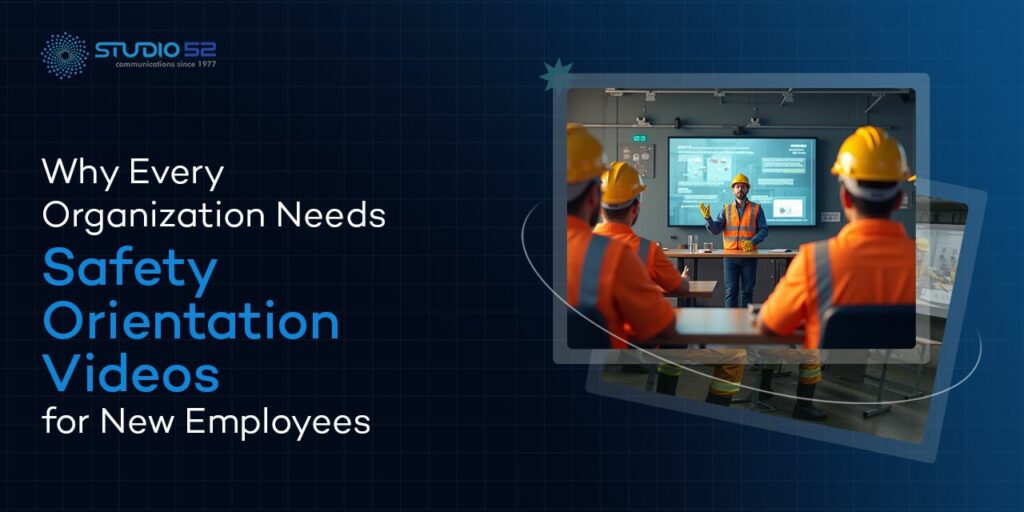
Many organizations also include HSE orientation videos at this stage to explain health, safety, and environmental responsibility together. This helps new employees understand that safety is not a separate topic discussed only during audits. It is part of daily work. A strong employee safety orientation video does not overwhelm people. It reassures them. It tells them, “This is how things work here, and this is how you stay safe while doing your job.”
Another important role of orientation videos is consistency. Verbal briefings change depending on who delivers them. Videos don’t. They deliver the same message every time, to every person, regardless of shift, role, or location.
Why New Employees Face Higher Safety Risks
New employees face higher safety risks because familiarity has not developed yet. Even experienced professionals become vulnerable in a new environment. Hazards that long term employees barely notice can be invisible to someone new. A machine may look harmless when it is idle. A marked zone may not seem important until something moves suddenly.
There is also social pressure. New employees want to prove themselves. They don’t want to interrupt. They don’t want to appear inexperienced. So when something feels unclear, they stay quiet. They rely on observation instead of confirmation. That silence is where risk grows.
Another issue is overload. Onboarding often includes HR processes, system access, job training, and introductions, all delivered in a short time. Safety information gets mixed into this and loses impact. Workplace safety orientation delivered through video helps separate safety from the noise. It gives it its own space. And that matters more than most organizations realise.
When incidents happen later, they are often traced back to early misunderstanding. Something the person “thought” was okay. Something they saw once and copied. Orientation videos help remove that guesswork.
How Safety Orientation Videos Improve Learning and Retention
People don’t remember everything they’re told. They remember what they can picture. Safety orientation training videos work because they show behaviour instead of describing it. They show where to walk. Where not to stand. How close is too close. These are small details, but they are the details that prevent injuries.
Videos can also be revisited. That matters. No one feels uncomfortable rewatching a video. Over time, repetition builds familiarity. Familiarity builds confidence. Confidence builds safer decisions.
Another key benefit is consistency. When safety orientation depends on who delivers it, details change. A video doesn’t forget. It doesn’t rush. It delivers the same message every time, whether the workplace is in the UAE, Saudi Arabia, or Oman. That consistency reduces misunderstanding and builds a shared safety baseline.
Retention improves when people feel the content reflects reality. When they recognize spaces, tools, and workflows, the message sticks longer.
Key Benefits of Safety Orientation Videos for Organizations
- Consistent safety messaging
Every new employee receives the same safety information, regardless of department, role, or location. This removes variation in how safety procedures are explained. - Time efficiency for supervisors
Supervisors no longer need to repeat basic safety briefings. The orientation video delivers core messages, allowing supervisors to focus on site walkthroughs and meaningful discussions. - Standardized training delivery
Safety orientation training videos ensure uniform training across the organization, reducing misunderstandings and gaps in knowledge. - Strong documentation and audit support
Videos provide clear, repeatable evidence of safety training videos, supporting compliance requirements and simplifying audits. - Reduction in early-stage incidents
Clear expectations from day one prevent unsafe habits from forming, leading to fewer injuries, minimal disruptions, and a stronger long-term safety culture.
Safety Orientation Videos vs Safety Induction Videos
Safety orientation videos are often treated as the same thing, but they serve different purposes. They introduce company-wide safety values, reporting culture, and general expectations that apply everywhere.
Safety induction videos are specific. They focus on a particular site, its hazards, access rules, emergency routes, and PPE requirements. They prepare employees for the physical environment they are about to enter.
Most organizations need both. Orientation explains the mindset. Induction prepares people for the place. Confusing the two often leads to gaps in understanding, especially for contractors and temporary staff.
Essential Topics to Cover in a Safety Orientation Video
A safety orientation video should focus on what new employees need to know first. PPE requirements. Emergency response basics. Hazard and incident reporting. General safe behaviour. And one message that often changes everything. You are allowed to stop work if something feels unsafe.
Custom orientation training videos allow organizations to show real risks and real workflows. When employees recognise what they see on screen, they pay attention differently. The goal is not to teach everything. The goal is to make sure people do not start unsafe.
Clear reporting pathways are also important. Employees should know exactly who to speak to and what happens when they raise a concern.
Role of Safety Orientation Videos in High Risk Industries
- Construction
Safety orientation videos explain site hazards, working-at-height risks, machinery movement, and PPE requirements before workers enter active sites. - Manufacturing
Videos demonstrate machine safety, lockout/tagout procedures, and emergency responses to reduce operator and maintenance injuries. - Oil and Gas
Orientation videos highlight fire hazards, explosive atmospheres, confined spaces, and strict operational protocols critical to worker safety. - Logistics and Warehousing
These videos cover forklift operations, loading docks, pedestrian pathways, and manual handling risks to prevent collisions and injuries. - Utilities (Power, Water, Gas)
Safety videos educate workers on electrical risks, underground services, confined spaces, and emergency isolation procedures. - Chemical and Process Industries
Videos communicate chemical handling procedures, exposure risks, spill response actions, and proper use of protective equipment. - Mining and Heavy Engineering
Orientation videos prepare workers for unstable environments, heavy equipment operations, restricted zones, and emergency evacuation protocols. - Multi-site Operations
Safety orientation videos standardize behaviour and safety expectations across different locations, even when site conditions vary.
Multilingual and Inclusive Safety Orientation Videos
Workplaces across UAE, Saudi Arabia, and Oman are often multilingual. This is a reality. But language barriers can increase safety risks if instructions are misunderstood.
Safety orientation videos help because visuals cross language boundaries. Demonstrations reduce reliance on words alone. Subtitles and multiple voiceovers add clarity. Inclusive training ensures everyone receives the same message, not just those confident in one language.
This inclusivity strengthens trust and encourages participation.
Why Choose Professional Safety Video Production Services
Safety videos are not marketing material. They are training tools. Accuracy matters. Tone matters.
A health and safety video agency ensures procedures are shown correctly and environments are realistic. A trusted safety video production company understands how to film safely, communicate clearly, and avoid creating confusion. When a video looks serious and grounded, people take it seriously.
Poorly produced videos can unintentionally encourage unsafe behaviour if details are wrong.
Future Trends in Safety Orientation Videos
Safety training is changing. Long sessions once a year are no longer enough. Organizations are moving toward shorter content delivered more often.
Animation is being used for complex hazards. Filmed content remains essential for showing real spaces.
Custom orientation training videos are becoming common because organizations understand that one size does not fit all.
Digital platforms allow better tracking and continuous improvement.
Conclusion
The first days of employment are fragile. People are learning, watching, and adjusting. This is exactly when safety matters most.
Safety orientation videos reduce confusion. They create clarity. They help new employees understand how safety actually works before habits form. Across UAE, Saudi Arabia, and Oman, organizations rely on them because prevention is always better than reaction.
If your organization wants onboarding that genuinely protects people, safety orientation videos are worth investing in. Studio52 provides safety video production services across UAE, Saudi Arabia, and Oman, creating clear and practical safety orientation training based on real workplaces. Studio52 helps organizations communicate safety in a way people understand from day one.
Equip your workforce with engaging Safety Orientation Videos that help new employees understand workplace procedures, safety protocols, and compliance requirements from day one. Studio52 creates customized safety videos for businesses across the UAE and Saudi Arabia.
UAE: +971 44541054
Saudi: +966 12 4220506
Email: askus@studio52.tv
FAQs
Why is it important to have an orientation for new employees?
The first few weeks of employment carry the highest risk for accidents and mistakes. A proper orientation helps new employees understand their role, the work environment, and potential hazards early on. This reduces confusion, builds confidence, and prevents errors that often happen when people are unsure or poorly guided.
What is the purpose of employee orientation?
The purpose of employee orientation is to help new employees understand their responsibilities, workplace expectations, and safety standards. It ensures they know how to perform their tasks correctly, who to approach for guidance, and how to work safely within the organization from day one.
What are the objectives of safety orientation?
Safety orientation aims to reduce workplace incidents by improving hazard awareness and teaching safe work practices. It clearly explains safety rules, emergency procedures, use of personal protective equipment, and reporting processes so employees can identify risks and respond correctly before problems occur.
What is the main goal of orientation?
The main goal of orientation is to prepare employees to work safely, confidently, and efficiently from the start. It helps them feel supported, understand expectations, and become productive while minimizing risks to themselves and others.
What are the two main types of orientation?
There are two main types of orientation. General orientation covers company-wide policies, values, and basic safety rules that apply to everyone. Site- or role-specific orientation focuses on location-based hazards, equipment, and procedures unique to a particular job or worksite.