
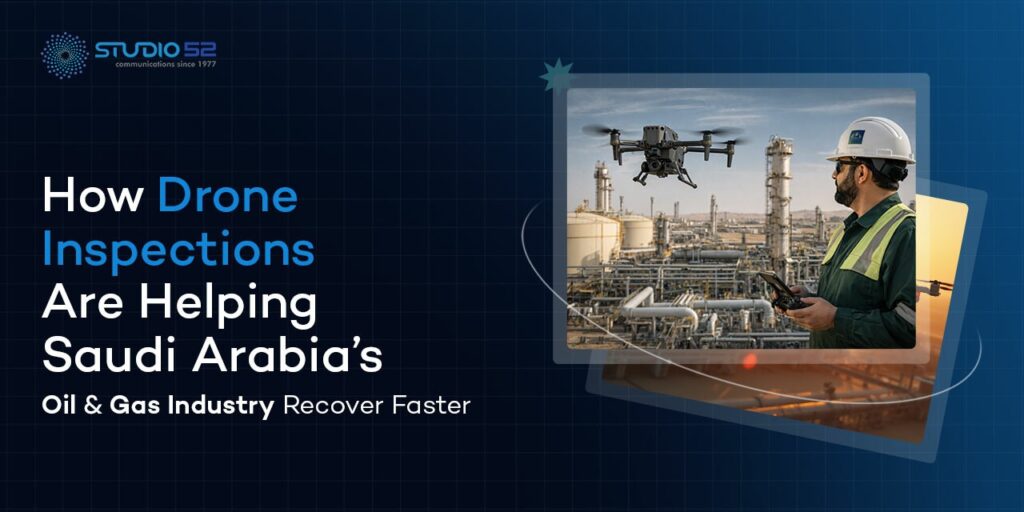

Recent tensions in the Middle East once again reminded the world how fragile energy infrastructure can be. For Saudi Arabia’s oil and gas sector, rapid inspections after potential threats or damage are critical. Drone technology is now helping companies inspect pipelines, refineries, and offshore facilities within minutes instead of days. From emergency damage assessment drones to refinery drone inspection services, aerial inspections are transforming how energy companies protect infrastructure and restore operations quickly.
Early March. News alerts began appearing across phones in control rooms, offices, and trading desks around the world. Reports spoke about drones crossing borders, air defense systems intercepting missiles, and rising tensions across the Middle East. For most people, the news meant geopolitical headlines. For engineers working inside oil and gas facilities in Saudi Arabia, it meant something very different. It meant one thing: be ready.
Energy infrastructure has always been a strategic target during regional conflicts. Pipelines, refineries, and export terminals are not just industrial assets. They are lifelines of global energy supply. And when tensions escalate, operators must ensure that every pipeline, tower, and storage tank remains safe. But how do you inspect thousands of kilometers of infrastructure quickly?
This is where oil and gas drone inspection technology is changing the way the industry responds to crises.
Table of Content
When Conflict Meets Energy Infrastructure
Saudi Arabia’s oil and gas network is one of the largest in the world. Pipelines run across vast desert landscapes, connecting refineries, storage facilities, and export terminals. A single refinery can process hundreds of thousands of barrels of crude oil every day. If even a small section of infrastructure is compromised, the impact can ripple across supply chains. During periods of geopolitical tension, energy companies must quickly verify that infrastructure remains secure. Engineers need to conduct a post-damage infrastructure inspection to verify the impact on pipelines, towers, or processing units. But inspecting massive industrial structures using traditional methods can take time. And during crises, time is something the industry cannot afford to lose. That is why drones for oil and gas industry operations are becoming a critical inspection tool.
The Old Way: Climbing Steel and Waiting for Answers
Before drones entered the picture, inspections required a lot of patience. Imagine a refinery tower rising high above the ground. To inspect it, technicians would need to install scaffolding or use rope access equipment. Safety teams would secure the area. Engineers would wait. Sometimes the process could take hours. In other cases, days. Traditional inspections come with several limitations:
- Workers must physically access hazardous structures
- Inspections require complex equipment setups
- Operations may need to pause during inspection
- Reaching remote areas can take significant time
In fast-moving situations, such delays slow down recovery. This is where drone inspection for oil and gas has quietly revolutionized the industry. Instead of sending teams up towers or across long pipeline routes, drones can fly directly to the inspection point and deliver instant visuals.
How Drones Inspect the Energy Backbone
Drone technology has evolved rapidly in the last few years. Today, advanced cameras, thermal sensors, and stabilization systems equip drones used in industrial inspections. Across Saudi Arabia, different types of drone inspections are now being used.
1. Pipeline Monitoring
Saudi Arabia operates thousands of kilometers of pipelines transporting crude oil and gas. A drone survey company, KSA, can monitor long pipeline routes quickly, detecting corrosion, leaks, or damage that might otherwise go unnoticed.
2. Flare Stack Inspection
Flare stacks are tall structures used to burn excess gases during refinery operations. Manual inspections are difficult because of height and heat exposure. Drones can approach these structures safely and capture detailed visuals.
3. Emergency and Incident Assessment
When incidents occur, companies must understand the situation immediately. Emergency damage assessment drones allow operators to inspect affected areas quickly and gather real-time data without risking human safety.
4. Thermal and Gas Leak Detection
Many drones carry thermal imaging cameras capable of detecting temperature variations. These capabilities allow drone inspection services in Saudi Arabia to identify overheating equipment or gas leaks before they escalate into larger problems.
5. Offshore Platform Review
Offshore platforms are complex environments surrounded by water and harsh weather. Drones simplify inspections by providing aerial views of structures that would otherwise require helicopters or boats to access.
6. Refinery Drone Inspection Services
Refineries contain dense networks of pipes, tanks, and processing equipment. Through drone inspection services for refineries, engineers can inspect large sections of infrastructure quickly and prioritize maintenance work efficiently.
Emergency Damage Assessment Drones: The First Eyes in the Sky
During periods of tension or after incidents, the first few minutes are crucial. Before sending technicians into potentially dangerous areas, operators need accurate information. This is where drones for emergency damage assessment become the industry’s first responders. A drone can launch within minutes and provide aerial footage that helps engineers understand what happened. These drones help teams:
- Identify visible structural damage
- Detect possible gas leaks
- Locate fire or heat sources
- Evaluate the safety of sending workers into the area
By delivering rapid insights, drones allow companies to respond faster and restore operations sooner.
How Refinery Drone Inspection Services Reduce Downtime
For refinery operators, downtime is expensive. Every hour of halted production can lead to significant financial losses and supply chain disruptions. Drone Inspections Saudi Arabia help reduce downtime by speeding up the inspection process. Instead of installing scaffolding or sending technicians into hazardous zones, drones can begin inspections almost immediately. Additionally, drones capture high-resolution imagery that engineers can analyze remotely.
Many operators now rely on industrial drone services in Saudi Arabia to conduct routine inspections and detect problems early. This proactive monitoring prevents unexpected failures and improves operational efficiency.
Key Benefits of Drone Inspection Services in Saudi Arabia
Drone inspections provide several advantages that traditional methods struggle to match. Some of the most important benefits include
- Faster inspections of large industrial structures
- Improved safety by reducing human exposure to hazardous areas
- Access to difficult or elevated locations
- Accurate thermal and visual inspection data
- Reduced operational downtime
- Lower inspection costs compared to traditional setups
- Improved monitoring of large infrastructure networks
Because of these benefits, drone inspection services in Saudi Arabia are becoming an essential part of industrial operations.
Applications of Drones Across Saudi Oil & Gas Infrastructure
Drone technology is now integrated into multiple areas of oil and gas operations. Common applications include:
- Monitoring pipeline networks across deserts
- Inspecting refinery towers and storage tanks
- Evaluating offshore platforms
- Detecting equipment overheating with thermal cameras
- Performing inspections after operational incidents
- Monitoring environmental safety around facilities
These capabilities demonstrate how drones are transforming infrastructure monitoring.
Choosing the Right Drone Service Provider for Oil & Gas
Industrial inspections require expertise and strict safety standards. Companies looking for a drone service provider for oil and gas should choose partners with experience in energy infrastructure inspections. A reliable provider typically offers:
- Certified drone pilots
- Advanced imaging and thermal sensors
- Experience working in complex industrial environments
- Compliance with Saudi aviation regulations
Organizations such as Studio52 provide professional inspection solutions across the region. Companies planning to hire a drone inspection company in Saudi Arabia should always select providers with proven experience in energy sector operations.
The Future of Drones in Saudi Arabia’s Energy Sector
Saudi Arabia is investing heavily in advanced technologies under Vision 2030. Digital transformation, automation, and smart infrastructure monitoring are becoming priorities across major industries. Drone technology is expected to play a major role in this transformation.
Future developments may include:
- Autonomous drones conducting scheduled inspections
- Artificial intelligence analyzing inspection data
- Real-time monitoring of industrial infrastructure
- Predictive maintenance powered by drone data
As these technologies evolve, drones for oil and gas industry operations will become even more important.
Conclusion
Recent regional tensions have reminded the world how critical energy infrastructure truly is. For Saudi Arabia’s oil and gas sector, rapid inspections are essential for maintaining operational stability. Drone technology is helping companies achieve such outcomes by enabling faster inspections, improving safety, and delivering accurate data. Organizations looking to book drone inspections in Saudi Arabia are recognizing that aerial inspections are no longer just a technological upgrade. They are becoming a crucial tool for protecting the world’s most important energy infrastructure.