
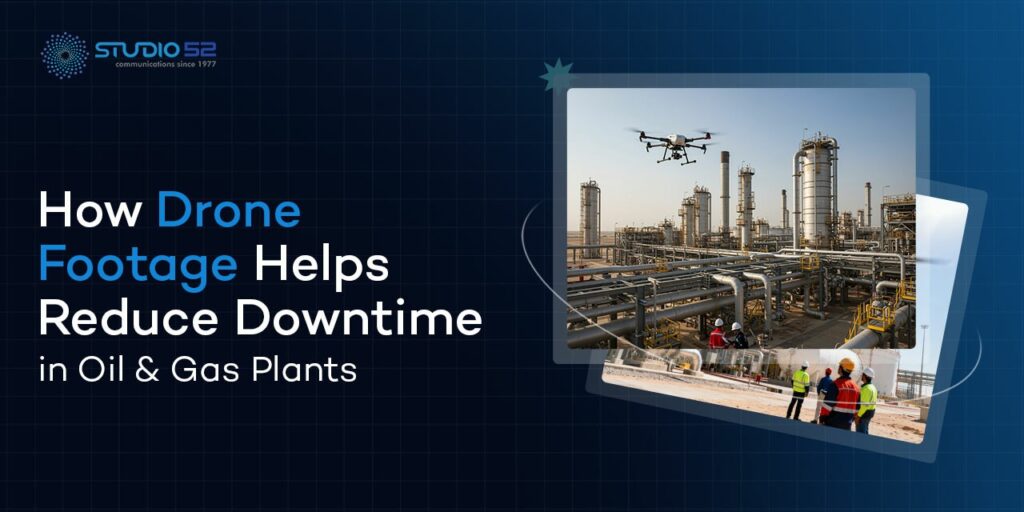

Downtime in oil and gas plants can cost millions, but smarter inspection methods are changing that. This blog explores how drone footage in oil and gas helps reduce downtime through faster inspections, real-time monitoring, and early fault detection. From pipelines to flare stacks, drones improve safety and efficiency without interrupting operations. Discover how companies in Saudi Arabia are using drone inspection services to stay ahead and how Studio 52 helps deliver reliable, data-driven results.
Let’s be honest for a second. Downtime is not just a technical issue. It is lost revenue, delayed operations, and unnecessary stress for your entire team. Now here is the real question. What if you could spot problems before they force you to stop? That is exactly what drone footage in oil and gas is helping companies achieve today. Across Saudi Arabia, operators are no longer waiting for failures. They are using drones to monitor, inspect, and act faster. The result is simple. Less downtime, better safety, and smoother operations.
Table of Content
Understanding Downtime in Oil and Gas Plants
Downtime does not always arrive with a warning. Sometimes it starts small. A minor leak. A slight temperature change. A surface crack that goes unnoticed. But in oil and gas plants, even small issues can escalate quickly. And when they do, the cost is never small. Traditional inspections often make things worse. They require shutdowns, heavy equipment, and large teams. So even before you fix a problem, you are already losing time. This is why oil and gas plant monitoring is shifting towards smarter solutions. Companies want visibility without disruption. They want answers without stopping operations.
What Drone Footage Means in Industrial Inspections
Drone inspections are not just about visuals. They are about clarity. With industrial drone inspections, you get access to areas that are difficult, risky, or time-consuming to inspect manually. Drones capture high-resolution images, detailed videos, and critical data within minutes. But what makes this even more powerful is thermal drone inspection. It helps detect heat patterns that indicate leaks, pressure issues, or equipment stress. These are problems you may not even see with the naked eye. So instead of reacting late, you start acting early. And that is where downtime begins to shrink.
Enhance safety and detect leaks early with Thermal Drones in Pipeline Monitoring. Improve efficiency, reduce downtime, and ensure compliance. Contact us today for advanced, reliable thermal inspection solutions.
Key Areas Where Drone Footage is Used in Oil and Gas Plants
Flare Stack Inspections
Inspecting flare stacks has always been complex. It usually involves shutdowns, scaffolding, and safety risks. With drone flare stack inspection, the entire approach changes. Drones can inspect flare stacks while they are still operational, capturing detailed visuals and identifying heat irregularities. This means you do not have to pause production just to check equipment. You get faster insights and avoid unnecessary delays.
Optimize safety and efficiency with Drone-Based Flare Stack Monitoring. Get accurate inspections, reduce risks, and improve compliance. Contact our experts today to schedule reliable, high-performance aerial monitoring solutions.
Pipeline Monitoring
Pipelines are long, remote, and difficult to monitor consistently. Manual inspections take time and often miss early signs of damage. With drone pipeline inspection, you can scan large areas quickly and accurately. Drones detect leaks, corrosion, and structural issues before they turn into failures. This not only prevents downtime but also protects the environment and reduces repair costs.
Storage Tank Inspections
Storage tanks need regular inspection, but accessing them is not always easy. Using aerial inspection services, drones provide a safer and more efficient alternative. They capture detailed visuals of tank surfaces and structures, helping identify cracks or corrosion early. This allows maintenance teams to act on time instead of reacting to sudden failures.
Offshore Platform Monitoring
Offshore inspections are expensive, risky, and time-consuming. With drone monitoring oil and gas plants, operators can inspect platforms remotely. Drones navigate tight spaces and capture accurate data without exposing workers to harsh conditions. This ensures regular monitoring without delays or safety concerns.
Hazardous Zone Monitoring
Some plant areas are simply too dangerous for manual inspection. High temperatures, toxic gases, and confined spaces make these zones risky. With drone inspection in oil and gas, these areas can be monitored safely. Drones provide real time insights without putting human lives at risk, ensuring inspections are done consistently.
How Drone Footage Reduces Downtime
Faster Inspections
Speed matters more than you think. Traditional inspections can take days. With drone inspection services, the same process can often be completed within hours. This allows teams to identify problems quickly and act before they impact operations.
Eliminating the Need for Shutdowns
Shutdowns are one of the biggest causes of downtime. With drone footage in oil and gas, inspections can happen while the plant is running. There is no need to stop operations, which means no unnecessary production loss. This single advantage can save significant time and money.
Early Detection of Equipment Issues
Most major failures start as small problems. With thermal drone inspection, these small issues can be detected early. Whether it is a heat anomaly or a minor leak, early detection helps prevent major disruptions. Fixing a small issue is always easier than handling a shutdown.
Real-Time Monitoring and Decision Making
Decisions are only as good as the data behind them. Drones provide live insights, improving oil and gas plant monitoring and helping teams make faster decisions. This reduces delays, improves response time, and keeps operations running smoothly.
Improved Maintenance Planning
Unplanned maintenance is one of the biggest reasons for downtime. With regular drone monitoring oil and gas plants, companies can plan maintenance based on actual data instead of assumptions. This leads to fewer surprises, better scheduling, and improved efficiency.
Safety Advantages of Drone Footage
Reduced Human Risk
Manual inspections often involve working at heights or entering confined spaces. With industrial drone inspections, workers can stay safe while drones handle the risky tasks. This reduces accidents and improves overall safety.
Safer Inspections in Hazardous Areas
Drones can operate in extreme conditions where human access is limited. Using drone inspection in oil and gas, companies can inspect dangerous zones without exposing workers to risk. This ensures that safety is always a priority.
Emergency Response Support
In emergencies, every second matters. Drones provide instant aerial views, helping teams assess situations quickly and respond effectively. This minimizes damage and reduces recovery time.
Compliance with Safety Standards
Regular inspections are essential for compliance. With drone inspection services, companies can maintain accurate records and ensure that safety standards are met without interrupting operations.
Cost Benefits of Drone Inspections
Reduced Inspection Costs
Traditional inspections require manpower, equipment, and time. Drones simplify the process, making drone filming services more cost-effective while delivering better results.
Minimizing Production Loss
Stopping operations for inspections leads to revenue loss. With drone footage in oil and gas, inspections happen without shutdowns, ensuring continuous production.
Lower Maintenance Expenses
Early detection means smaller repairs. With drone inspection oil and gas companies can fix issues before they become expensive problems.
Higher Return on Investment
When you combine reduced downtime, improved safety, and lower costs, the return becomes clear. Drone inspections are not an expense. They are an investment in efficiency.
Why Choosing the Right Drone Partner Matters
Having the right technology is important. But having the right team is what truly delivers results. This is where Studio52 stands out. With decades of experience in the region, Studio 52 provides advanced drone filming services, aerial inspection services, and complete drone inspection services tailored for oil and gas operations. Their team understands how to capture not just footage, but actionable insights that help reduce downtime and improve safety.
Ready to Reduce Downtime in Your Plant
If downtime is slowing your operations, it is time to take a smarter approach.
With drone footage in oil and gas, you can:
- Detect issues early
- Avoid unnecessary shutdowns
- Improve safety across your plant
- Make faster and better decisions
Get in touch with Studio 52 today and see how drone inspection services can transform your operations in Saudi Arabia.
FAQs
What are drones used for in oil and gas?
How do drones help in pipeline inspection?
Are drones safe for refinery inspections?
How much time do drone inspections save?
What industries use drone inspection technology?