
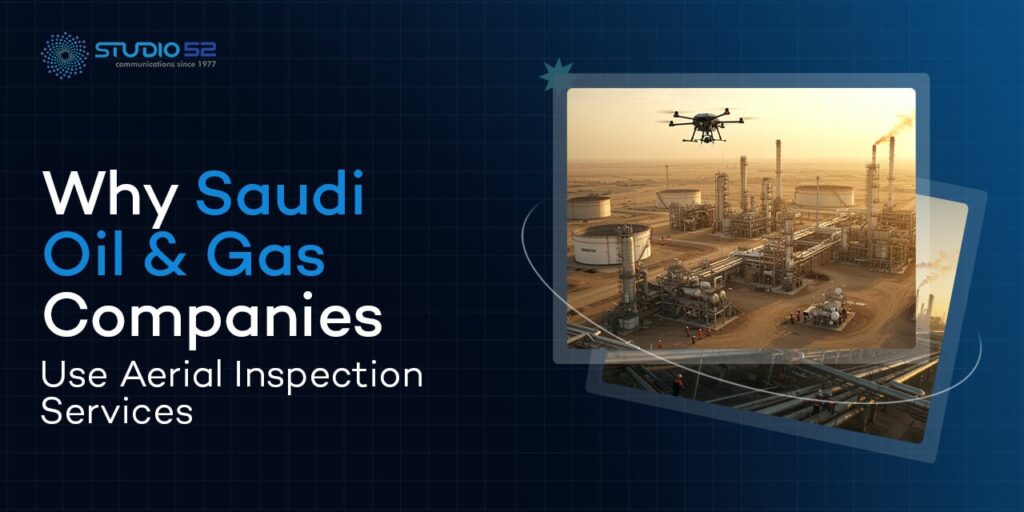

Oil and gas operations in Saudi Arabia demand constant monitoring, precision, and safety. Aerial inspection services are helping companies manage large and remote assets more efficiently than ever before. By using drones, businesses can reduce risks, speed up inspections, and gather accurate data without interrupting operations. This blog breaks down why aerial inspection services are becoming essential, the benefits they bring, and how they are changing the way oil and gas companies approach infrastructure monitoring.
If you think about the scale at which oil and gas companies operate in Saudi Arabia, it is honestly massive. Pipelines stretch endlessly across desert landscapes, refineries run complex systems every single day, and many facilities are located far away from easy access.
Now imagine inspecting all of that manually.
For years, that is exactly how things were done. Teams would travel long distances, climb structures, and spend hours or even days checking assets. It worked, but it came with risks, delays, and high costs.
Today, things feel different.
More companies are shifting towards aerial inspection services for oil and gas, not because it is a trend, but because it simply makes more sense. With drones, inspections are quicker, safer, and far more detailed.
And in a region like Saudi Arabia, adopting aerial inspection services in Saudi Arabia is becoming a practical move rather than a futuristic idea.
Table of Content
So, What Exactly Are Aerial Inspection Services?
Let us simplify it.
Aerial inspection services use drones to look at infrastructure from above. These drones are not just flying cameras. They are equipped with high-resolution imaging, sensors, and tools that capture detailed information in real time.
In the oil and gas world, this means:
- Checking pipelines that run for kilometers
- Inspecting storage tanks and processing units
- Monitoring facilities that are hard to reach
- Supporting aerial infrastructure inspection in risky environments
With drone inspection services for oil and gas, companies are no longer limited by physical access. They can see more, understand more, and act faster.
Why Monitoring Infrastructure Is a Big Deal in Oil & Gas
Keeping Operations Safe Every Day
Safety is not something oil and gas companies can compromise on. Even a small issue can turn serious if it goes unnoticed.
Using oil and gas aerial inspection, teams can spot early warning signs before they turn into major problems.
Avoiding Unexpected Breakdowns
No company wants operations to stop because of equipment failure. It affects production, costs money, and creates unnecessary stress.
With aerial inspection for pipelines and refineries, issues like corrosion or damage can be identified early and handled in time. Drone Filming for Refineries enhances safety, reduces downtime, and delivers accurate aerial insights for inspections.
Staying Aligned with Regulations
There are strict standards that companies must follow. Inspections are not optional, they are required.
Aerial inspections make it easier to document everything properly and stay compliant without slowing down operations.
Reducing Risk for People Nearby
Traditional inspections often put workers in uncomfortable or dangerous situations. Climbing tall structures or entering confined spaces is never ideal.
That is why many companies are turning to industrial drone inspection services to reduce direct exposure to risk.
What Is Driving This Shift in Saudi Arabia?
The Reality of Large and Remote Assets
Saudi Arabia’s oil and gas infrastructure is spread across huge areas. Some locations are not easy to access at all.
This is where aerial drone inspection for pipelines becomes incredibly useful. It cuts down travel time and makes inspections much more practical.
Faster Inspections Are No Longer Optional
Delays can lead to bigger issues. Companies need information quickly to make the right decisions.
Aerial inspections deliver that speed without compromising on quality.
A Safer Way to Work
Companies are becoming more conscious about worker safety. Reducing exposure to hazardous environments is now a priority, not an afterthought.
Managing Costs Without Cutting Corners
Traditional inspections involve manpower, equipment, and downtime. All of this adds up.
With drone monitoring for oil and gas facilities, companies can reduce costs while actually improving results.
Aligning with a More Digital Future
Saudi Arabia is moving towards smarter and more tech-driven industries. Aerial inspections naturally fit into this transformation.
What Do Companies Actually Gain from Aerial Inspections?
A Noticeable Improvement in Safety
Fewer people in risky environments means fewer chances of accidents. It is as simple as that.
Quicker Access to Data
Instead of waiting days, teams can access inspection data almost immediately. That changes how decisions are made.
Clear and Detailed Visuals
Drones capture visuals that are sharp and highly detailed. Engineers can analyze issues without needing to be physically present.
Operations Keep Running Smoothly
One of the biggest advantages is that inspections do not require shutdowns. Work continues as usual.
Better Planning for Maintenance
With regular data from aerial infrastructure inspection, companies can plan ahead instead of reacting to problems later.
The Technology Making It All Possible
Drones That Do More Than Just Fly
Modern drones are built for industrial use. They are stable, precise, and capable of capturing detailed visuals in tough conditions.
Thermal Imaging That Spots the Invisible
Some problems are not visible to the naked eye. Thermal imaging helps detect heat changes, leaks, or faults that would otherwise go unnoticed.
Smart Data with AI Support
Artificial intelligence helps process large amounts of inspection data quickly. It highlights what needs attention, saving time and effort.
Accurate Mapping with GPS
When inspecting long pipelines, accuracy matters. GPS ensures that every inspection point is tracked and recorded properly, especially during aerial drone inspection for pipelines.
Why Traditional Inspection Methods Are Falling Behind
They Put People at Risk
Manual inspections often involve challenging conditions. That risk is hard to justify when safer alternatives exist.
Not Everything Is Easy to Reach
Remote and complex structures make traditional inspections difficult and time-consuming.
They Take Too Much Time
Time is critical in oil and gas operations. Slower inspections can delay important decisions.
Costs Keep Increasing
More manpower and resources mean higher expenses, without necessarily better outcomes.
Why Working with Experts Makes a Difference
Having the right technology is important, but knowing how to use it effectively is what really matters.
Studio 52 has built a strong presence in delivering aerial inspection solutions tailored for industrial needs in Saudi Arabia.
When companies work with experienced providers, they benefit from:
- Reliable and accurate inspection data
- Smooth execution without disruptions
- Better understanding of complex environments
- Consistent safety and compliance standards
This is where industrial drone inspection services truly deliver value, not just in capturing visuals but in turning them into actionable insights.
Conclusion
The way oil and gas companies approach inspections is clearly evolving.
In Saudi Arabia, where operations are vast and often complex, aerial inspections are solving real challenges. They are making monitoring easier, safer, and far more efficient.
Adopting aerial inspection services for oil and gas is not just about keeping up with technology. It is about making smarter decisions, reducing risks, and improving overall performance.
Thinking About Smarter Inspections?
If your current inspection process still feels slow, risky, or resource-heavy, it might be time to look at a better approach.
With advanced aerial inspection services in Saudi Arabia, you can gain faster insights, improve safety, and keep your operations running without interruptions.
Connect with experts like Studio52 and see how aerial inspections can transform the way you manage your oil and gas assets.
FAQs
How are drones used in the oil and gas industry?
Why are drones important for pipeline inspections?
Can drones inspect oil refineries and storage tanks?
Are drone inspections better than traditional inspections?
Can drones detect leaks in pipelines?
What industries use aerial inspection services?