
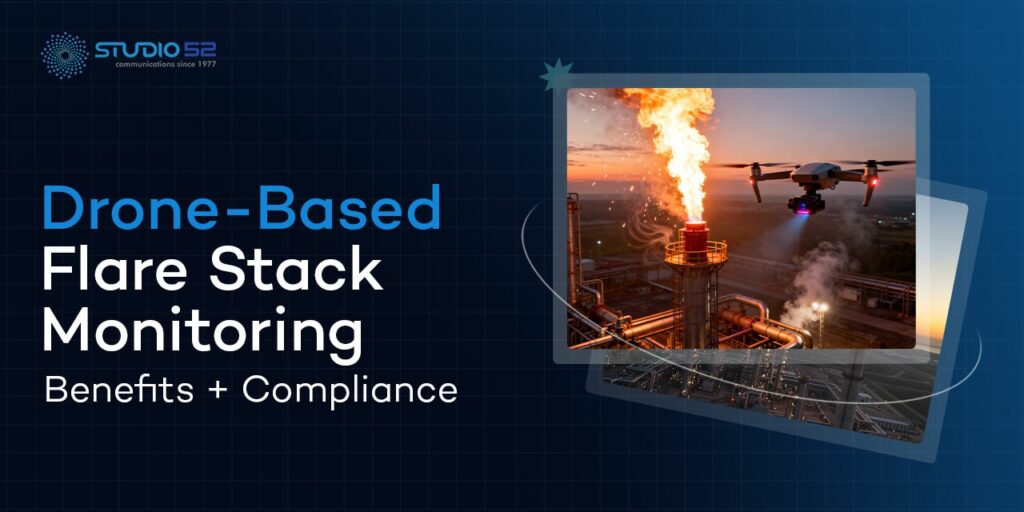

Drone flare stack monitoring is helping oil and gas companies in Saudi Arabia handle inspections in a safer and more practical way. Instead of relying on manual inspections that take time and involve risk, drones are being used to get faster and more accurate results. This blog walks through how drone flare stack inspection works, why traditional methods are becoming less effective, and how businesses are improving safety, reducing downtime, and staying compliant.
Flare stack inspections have never really been simple. They usually mean planning around shutdowns, setting up equipment, and sending people into conditions that are not exactly easy to work in. It gets the job done, but it is far from ideal. That is why things are starting to shift. Drone flare stack monitoring is not being adopted just because it sounds modern. It is being used because it solves problems that teams deal with every day. Less risk, less delay, and better clarity on what is actually happening on site.
Table of Content
What Is Drone-Based Flare Stack Monitoring?
At a basic level, it just means using drones to inspect flare stacks instead of sending someone up there.
But what makes it useful is what the drone can actually do.
A flare stack inspection drone is equipped with cameras, thermal sensors, and sometimes gas detection tools. It can move around the structure, get close to problem areas, and capture details that are not easy to spot manually.
That is why drone inspection for oil and gas teams are leaning toward this approach. It is not about replacing experience. It is about supporting it with better data.
Challenges of Traditional Flare Stack Inspections
Worker Safety Risks
Working at height near heat and gases is always going to carry risk. Even with proper safety steps, it is not something you can eliminate.
Operational Downtime
Most traditional inspections require at least some level of shutdown. And every shutdown affects production.
Limited Inspection Accuracy
Manual inspections depend on what someone can see and access. Smaller issues can slip through.
High Inspection Costs
Once you factor in equipment, manpower, and time, the costs build up quickly.
Regulatory Pressure
There is more focus now on safety and environmental compliance, especially in Saudi Arabia. That means inspections need to be more consistent and better documented.
How Drone Technology Is Transforming Flare Stack Monitoring
Remote Inspections
With UAV inspection of oil and gas setups, inspections are handled from the ground. No climbing, no exposure.
Live Video Monitoring
Drone filming services allow teams to watch everything in real time. If something looks off, it can be flagged immediately.
Advanced Sensors
Thermal drone inspection helps detect heat patterns, while gas sensors can identify leaks that are not visible.
AI & Data Analytics
Instead of going through hours of footage, AI tools help highlight areas that need attention. It saves time and reduces the chances of missing something.
Faster Inspection Cycles
Inspections that used to stretch over days can now be completed much faster. In many cases, within hours.
Key Benefits of Drone-Based Flare Stack Monitoring
Reduced Operational Downtime
Inspections can often be carried out without completely stopping operations. This means teams can continue their work while critical areas are being monitored, helping maintain productivity and avoid unnecessary interruptions that can affect timelines.
Cost Savings
Industrial drone inspection reduces the need for large setups, specialized equipment, and extended timelines. With fewer resources required and faster execution, businesses can significantly lower inspection costs over time, especially for recurring checks.
High-Quality Data Collection
Drones provide more than just basic visuals. They capture high-resolution footage, thermal readings, and detailed recordings that can be reviewed later. This allows teams to analyze conditions more accurately instead of relying only on manual observations.
Faster Decision Making
When clear data is available quickly, teams do not have to wait for lengthy reports. Immediate access to visuals and insights helps decision-makers act faster, reducing delays and keeping operations running efficiently.
Preventive Maintenance
Drone pipeline and flare inspections help identify early signs of wear, damage, or irregularities. Fixing these small issues early prevents them from turning into larger, more expensive problems, improving overall maintenance planning.
Regulatory Compliance and Environmental Monitoring
Compliance is becoming a bigger part of everyday operations.
Flare stack compliance inspection is no longer just a requirement on paper. Companies need proper records and reliable data to show that everything is being monitored correctly.
Drone flare stack monitoring makes this easier. It helps track emissions, detect leaks, and maintain documentation without adding extra complexity.
Drone Technologies Used in Flare Stack Monitoring
Thermal Imaging Cameras
These help identify heat differences that can point to leaks or damage.
Optical Zoom Cameras
They allow close inspection from a safe distance without missing details.
Gas Detection Sensors
Used to detect emissions and support environmental monitoring.
AI-Powered Inspection Software
Helps process data quickly and highlight areas of concern.
GPS Mapping and Flight Planning
Ensures inspections are accurate and consistent every time.
Real-World Applications
Oil Refineries
In oil refineries, inspections are frequent, but shutting down operations is never ideal. Drone flare stack monitoring allows teams to inspect flare stacks while everything continues running. This helps avoid delays and keeps production on track while still getting clear inspection data.
Offshore Oil Platforms
Offshore platforms come with added challenges like wind, height, and limited access. Using a flare stack inspection drone reduces the need for workers to take risks. Inspections can be done safely from a distance, even in areas that are difficult to reach manually.
Petrochemical Plants
Petrochemical plants need regular monitoring to keep systems running smoothly. Industrial drone inspection makes it easier to carry out checks without slowing down operations. It also helps teams spot issues early instead of dealing with them later.
LNG Facilities
In LNG facilities, early detection is important. Thermal drone inspection helps identify heat changes that may indicate leaks or system issues. This allows teams to act quickly and maintain safety across the facility.
Large Industrial Complexes
Large industrial sites can be difficult to inspect manually due to their size. Drone pipeline and flare inspection helps cover large areas faster and more efficiently, giving teams a better overall view of site conditions.
Conclusion
If you look at it practically, the shift toward drone flare stack inspection makes sense.
It reduces risk. It saves time. It gives better visibility into what is actually happening.
For oil and gas companies in Saudi Arabia, where operations are large and expectations are high, that combination matters.
Drone flare stack monitoring is no longer just an option. It is quickly becoming the more practical one.
Work with Studio 52 for Reliable Drone Inspection Solutions
If you are thinking about moving away from manual inspections, it helps to work with a team that understands both the technology and the industry.
Studio52 offers drone filming services and industrial drone inspection solutions designed for oil and gas operations in Saudi Arabia.
From drone flare stack inspection to full UAV inspection, oil and gas support, their team focuses on getting accurate results without disrupting your operations.
If inspections are still slowing you down or adding risk, it might be time to look for a better way to do things.
Reach out to Studio52 and see how drone flare stack monitoring can fit into your operations.