
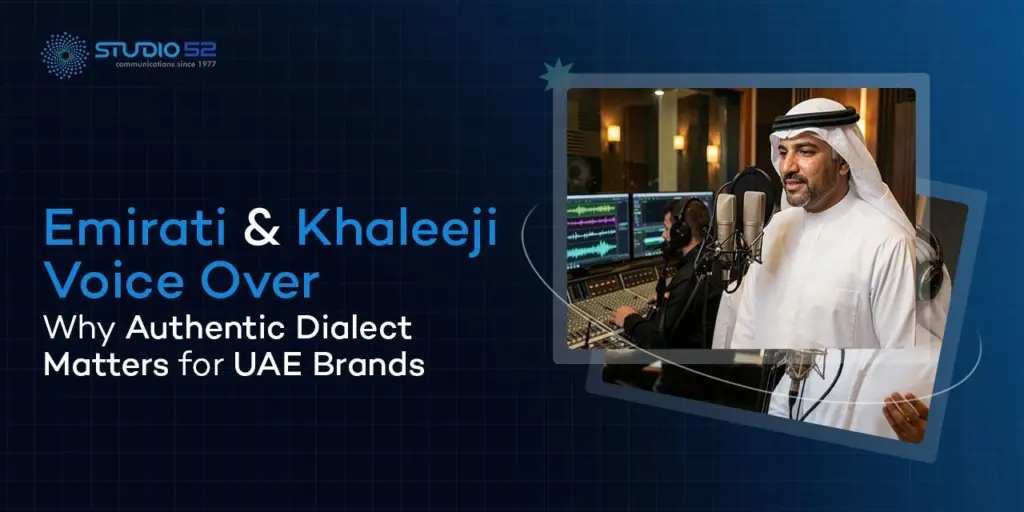

In a market as culturally rich and competitive as the UAE, the way a brand speaks to its audience is just as important as what it says. Localized communication is no longer a nice-to-have, it is a core part of how customers decide whether a brand understands them. Language and dialect shape perception instantly. A familiar accent signals belonging, while a generic or foreign-sounding voice can quietly create distance. This is why demand for authentic Emirati voice over and Khaleeji voice over talent has grown so sharply. When a brand chooses the right voice, it does more than narrate a message, it builds an emotional bridge that strengthens engagement and trust.
Table of Content
What Is Emirati Voice Over?
Understanding the Emirati Dialect
An Emirati voice over is narration delivered in the Arabic dialect spoken across the United Arab Emirates. While Arabic is a shared language throughout the region, the Emirati dialect carries its own distinct pronunciation, vocabulary, and cultural expressions. Certain words, intonations, and turns of phrase are unmistakably local, and native listeners pick up on them immediately. These subtle markers are what make a message feel like it comes from within the community rather than from outside it.
How Emirati Arabic Differs From Modern Standard Arabic (MSA)
Modern Standard Arabic is formal, polished, and used in news broadcasts, official statements, and written communication. It is understood across the Arab world but rarely spoken in everyday conversation. Emirati Arabic, by contrast, is conversational and warm — the language people use at home, with friends, and in daily life. For brands, this difference matters enormously. MSA can feel authoritative but distant, while the Emirati dialect feels personal and relatable. The choice between them directly influences how an audience perceives a brand and whether they feel genuinely spoken to.
What Is Khaleeji Voice Over?
Understanding Khaleeji Arabic
Khaleeji, or Gulf Arabic, is the broader dialect family spoken across the GCC countries, including Saudi Arabia, Kuwait, Qatar, Bahrain, Oman, and the UAE. Emirati Arabic is part of this wider Khaleeji group, sharing many features with its neighbors while retaining local distinctions. To an outside ear the dialects may sound similar, but native speakers easily recognize the differences in accent and word choice that mark each country.
When Brands Use Khaleeji Voice Overs
Khaleeji voice overs are the natural choice when a campaign needs to resonate across the entire Gulf region rather than a single country. They suit regional GCC advertising, cross-border marketing initiatives, and corporate communications aimed at a Gulf-wide audience. A Khaleeji voice gives brands the flexibility to feel local across multiple markets without sounding tied to just one.
Why Authentic Dialect Matters for UAE Brands
Builds Stronger Audience Trust
People naturally connect with familiar speech patterns. When customers hear a voice that sounds like their own, it creates an immediate sense of authenticity and comfort. This is why hiring a Khaliji voice over artist makes a measurable difference, that familiarity lowers resistance and makes the message feel trustworthy from the first sentence.
Enhances Brand Credibility
Using an authentic dialect demonstrates cultural understanding. It tells the audience that the brand has taken the time to learn how they speak and what they value. This positions the brand as locally relevant rather than as an outsider trying to break in, which is a powerful credibility signal in the UAE market.
Improves Customer Engagement
A relatable voice makes messaging more engaging. When tone, accent, and expression match the audience, the content feels like a conversation rather than an advertisement. This stronger emotional connection keeps listeners attentive and makes them more receptive to the message.
Supports Effective Marketing Campaigns
Authentic voice overs improve campaign performance. Audiences pay closer attention to content that sounds native to them, and they retain the message longer. The result is higher recall, better response rates, and a measurable lift in the effectiveness of marketing spend.
Emirati vs MSA: Which Dialect Should Brands Choose?
There is no single right answer — the best choice depends on the goal of the content.
Choose Emirati Arabic for UAE-focused advertising campaigns, retail promotions, social media content, and radio commercials. These formats thrive on relatability and a local, conversational tone.
Choose MSA for government communications, corporate training content, pan-Arab regional campaigns, and educational materials. These contexts call for formality, neutrality, and broad regional comprehension.
Where Emirati Voice Overs Deliver the Most Impact
Emirati voice overs add value across a wide range of formats. They bring warmth and authenticity to TV and radio advertising, lend a credible local tone to corporate videos, and make social media campaigns feel native to the feed. They also improve IVR and telephone systems by making automated interactions friendlier, enhance e-learning and training content with clear and relatable narration, and elevate event and exhibition presentations where a confident local voice commands attention.
Industries Benefiting From Emirati Voice Over Services
A native voice strengthens communication across nearly every sector. The government and public sector use it to connect with citizens, while banking and finance rely on it to build trust around sensitive services. Real estate and property development brands use Emirati voices to appeal to local buyers, and the hospitality and tourism industry uses them to convey warmth and welcome. In healthcare, a familiar voice reassures patients, and in retail and e-commerce it drives engagement and conversions.
Why Professional Emirati Voice Over Artists Matter
Professional native talent brings qualities that generic Arabic voices simply cannot replicate. Native pronunciation and fluency ensure every word sounds authentic. Cultural understanding allows the artist to deliver lines with the right context and nuance. A natural tone and delivery make the message feel human and effortless. Together, these create a far stronger audience connection than a generic or non-native Arabic voice could ever achieve.
Looking for an Authentic Emirati Voice?
Connect with native Emirati voice artists who deliver culturally accurate recordings for commercials, IVR, eLearning, and corporate projects.
Common Mistakes Brands Make
Several missteps undermine otherwise strong campaigns. The most common is using generic Arabic for UAE-specific campaigns, which strips away local relatability. Others include ignoring local cultural nuances, choosing AI-generated voices over native talent, and prioritizing cost over authenticity. Each of these shortcuts saves money or time in the short term but weakens the connection that makes a campaign succeed.
How to Choose the Right Emirati Voice Over Artist
Selecting the right talent comes down to a few key checks. Review the artist’s native dialect experience to confirm authenticity, and listen to previous voice samples to judge their range and style. Assess their industry expertise to ensure they understand your sector, and evaluate audio quality and production standards so the final delivery meets broadcast expectations.
Why Work With a Professional Arabic Voice Over Company UAE
Partnering with an established Arabic voice over company in the UAE gives brands access to native Emirati and Khaleeji voice talent, broadcast-quality audio production, and fast turnaround times. Just as importantly, it offers end-to-end project support, so everything from casting to final delivery is handled smoothly and professionally.
Conclusion
Authentic Emirati and Khaleeji voice overs help brands connect far more effectively with UAE audiences. Local dialects build trust, deepen engagement, and improve overall campaign performance in ways that generic Arabic narration cannot match. By working with professional, native voice over artists, brands ensure their communication is culturally relevant, emotionally resonant, and produced to the highest standard.
Looking for Authentic Emirati or Khaleeji Voice Over Services?
Connect with UAE audiences through professional voice overs delivered by native Emirati and Gulf Arabic voice artists. From commercials and corporate videos to IVR systems and digital campaigns, the right voice can make all the difference.
Contact our team today to discuss your Emirati or Khaleeji voice over project.