
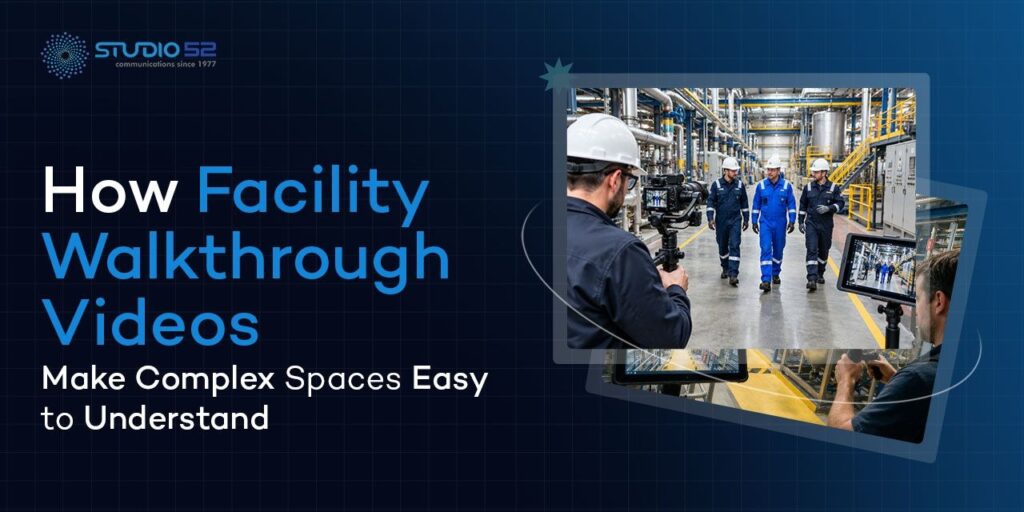

Industrial operations in the UAE demand clear communication. Factories, refineries, and distribution centres have complicated floor plans. New employees and visitors often struggle to find their way around.
Paper maps and static diagrams often fail to explain site workflows. Managers host groups, block off hazardous zones, and disrupt daily work. Safety risks increase when untrained visitors walk through active production lines.
Facility walkthrough videos fix this problem. They show the space, the flow, and the rules in a few clear minutes. Modern companies choose visual media to fix these challenges. High-quality walkthrough videos provide clear digital tours without operational downtime. They allow viewers to explore every room and equipment bay remotely.
By turning complex layouts into engaging visuals, companies streamline operations. They improve training, impress global partners, and keep workers safe. Visual walkthroughs bridge the gap between technical design and clear human understanding.
This blog explains how these videos work, where they fit, and what makes a good one. Read on if your site feels hard to explain.
Table of Content
What Is a Facility Walkthrough Video?
A facility walkthrough video takes viewers through a building or site from start to finish. It moves room by room. It shows entrances, work areas, equipment, exits, and restricted zones. Video creators combine camera footage, voiceover guides, and clear graphics to explain spatial layouts.
Companies produce these videos in two main formats: live-action filming and 3D digital renders. Live-action cameras capture real-world operational environments. In contrast, a 3D walkthrough animation builds virtual models of existing or planned buildings.
These videos highlight critical paths, emergency exits, and specialised machinery. Viewers observe daily operations without stepping onto a physical plant floor.
Businesses distribute these videos on their websites, mobile applications, and training portals. These are dependable digital manuals for employees, customers and auditors all. Visual walkthroughs transform static floor plans into clear, dynamic experiences.
Why Complex Spaces Are Difficult to Understand
Large facilities have many moving parts. Corridors look alike. Departments sit far apart. Machines run in areas that visitors cannot enter. Multi-story factories, piping networks, and restricted zones create dense visual environments. 2D blueprints rarely help non-engineers grasp structural flow. People misinterpret spatial scale, machinery depth, and safety clearances on paper.
Words alone rarely help. Walls and doors appear on a floor plan, but it does not indicate scale or height. Static drawings cannot show movement or process sequences. Physical tours have limits too. Guides talk fast, groups get split, and safety rules restrict access. Visitors leave with half the picture.
High noise levels inside heavy manufacturing plants block verbal explanations. Group members struggle to hear tour guides over spinning turbines or roaring engines. Bad weather and high outdoor temperatures in the Gulf region further complicate walking tours.
Hazardous areas limit human access entirely. High-voltage rooms, chemical storage tanks, and cleanrooms ban standard visitors. Without visual aids, stakeholders struggle to picture critical plant functions. Clear video tours resolve these spatial barriers effortlessly.
New staff feel this pressure most. They worry about mistakes, so they ask the same questions. That slows every team down.
How Facility Walkthrough Videos Simplify Complex Environments
Facility walkthrough videos replace guesswork with visual clarity. They guide the viewer’s eye through complex structures with logical camera movements. Smooth transitions show exact connections between different plant zones. Video gives viewers one clear path. The camera moves through the site in a logical order.
It can remove walls, slice through floors, and show hidden pipework or wiring behind panels. Viewers see how a space works, not only how it looks. It also reveals internal gears and structural layers. Viewers watch internal mechanics in motion while listening to clear narrative explanations.
Make important safety procedures easier to understand and remember with a professionally produced animated safety video. From workplace hazards and emergency procedures to HSE training and safety awareness, clear visual storytelling can help employees learn and retain critical information.
Labels and voiceover add context. On-screen text labels identify equipment names, safety zones, and directional arrows. A short caption names each zone. A narrator explains what happens there. Viewers connect the layout with the purpose.
Colour-coded overlays show gas lines, electrical conduits, and exits. These graphic call-outs emphasize important information without a busy screen. Video also repeats without effort. Anyone can replay a section when they feel unsure. That helps people learn at their own speed.
Key Benefits of Using Facility Walkthrough Videos
Facility walkthrough videos help several groups at once. Staff, visitors, and clients all gain something. Let’s find out the major benefits.
Faster Employee Orientation
New hires learn the layout before day one. They know where the canteen, the exits, and the control room are. Managers spend less time on basic directions.
HR teams also gain consistency. Every employee sees the same tour and hears the same message. No one gets a rushed version because a guide felt busy.
Improved Safety Awareness
Video marks danger zones clearly. It depicts sidewalks, hard-hat zones, fire exits, and meeting areas. A 3D walkthrough animation can also show hidden hazards. It can highlight live equipment or high-voltage rooms. Workers remember what they see far better than what they read.
Better Visitor Preparation
Visitors can come with clear knowledge of what to expect. They know the way in, the check-in process, and the rules of the site. Reception teams handle fewer questions.
Contractors gain the most here. They know which gates to use and which areas to avoid. This reduces wait times and the potential for error. That cuts delays and lowers risk.
Easier Client and Stakeholder Communication
Clients want to see your capacity. Investors want to understand your setup. A video shows both in minutes, without travel.
Overseas partners can watch it from any location. Your sales team can share one link in an email. Decision makers then join calls with a clear picture.
Reduced Dependence on Physical Tours
Every live tour pulls staff away from work. It also raises safety and security issues. Some areas simply cannot host visitors.
A video reduces the need for those tours. Teams still run them for key guests. Everyone else watches first, which saves hours each month.
Better Information Retention
People remember moving images better than plain text. A visual route sticks in memory. Viewers recall turns, landmarks, and room names with less effort.
Short videos also hold attention. A five-minute video is better than a forty-page manual. Employees complete it and remember more of it.
Where Facility Walkthrough Videos Can Be Used
These videos suit any site that confuses first-time visitors. Industries across the UAE already use them. Here are the most common sectors.
Manufacturing Facilities
Factories have long production lines and tight safety rules. A 3D factory walkthrough animation video shows each stage in order. Viewers follow raw material from the gate to the finished product.
It also helps with audits and buyer visits. Clients see your process without stepping onto a busy floor.
Oil & Gas Facilities
Oil and gas sites carry high risk and limited access. Teams cannot walk visitors through live units. Animation solves that gap safely.
Firms often request 3D industrial plant walkthrough animation services for this reason. The video shows pipelines, tanks, control rooms, and emergency routes. Contractors learn the site before they arrive.
Warehouses and Distribution Centres
Warehouses grow fast. Racks, docks, and pick zones change often. New staff get lost quickly.
A walk-through video of the reception, storage, packing, and dispatch.
It also indicates forklift lanes and pedestrian lanes. Drivers and temporary workers gain a clear picture in minutes.
Corporate Offices
Large offices confuse visitors. There are multiple floors, conference rooms and secured areas, so it’s hard to find your way around. A brief video greets visitors and introduces them to the team.
It also aids in the onboarding of new staff. They locate desks, printers, and prayer rooms without having to ask.
Construction and Real Estate
Buyers cannot tour a building that does not exist yet. Video fills that gap. It shows layouts, finishes, and amenities before construction ends.
Developers also use walkthroughs to update investors. Progress and planned features appear in one clean presentation.
Healthcare Facilities
Hospitals and clinics stress patients. Confusing layouts add to that stress. A walkthrough video shows the entrance, registration desk, wards, emergency room, surgical suites, diagnostic centres, and waiting areas.
It benefits staff too. New nurses and technicians learn restricted zones and emergency routes quickly. That supports safer, calmer care.
Live-Action vs. 3D Facility Walkthrough Videos
Choosing between live-action filming and 3D animation depends on your facility goals. Live-action cameras capture existing facilities with authentic human presence. Film crews shoot real equipment, active employees, and genuine plant environments. This format works best for completed sites that want to show active daily operations.
However, live-action camera work faces limits in dangerous or unfinished spaces. In contrast, 3D animation builds digital environments from architectural drawings. Animators depict unbuilt structures, hidden internal machinery, and microscopic chemical reactions.
Working with an experienced 3D animation company in Dubai allows businesses to customise every frame. Producers adjust lighting, remove clutter, and add dynamic camera paths easily.
| Feature | Live-Action Walkthrough Video | 3D Animated Walkthrough Video |
| Visual Style | Real camera footage | Computer-generated graphics |
| Machine Views | External views only | Internal cutaways & explosion views |
| Flexibility | Requires physical site access | Fully customizable virtual scenes |
| Best For | Existing, operational facilities | Unbuilt, dangerous, or hidden spaces |
Many top companies combine both formats for maximum impact. They use live footage for office spaces and 3D renders for high-tech machinery.
Essential Elements of an Effective Facility Walkthrough Video
A strong video follows a clear plan. Random footage confuses viewers. Focus on these elements.
- A logical route. Start at the entrance and move through the site in real order.
- Clear labels. Name every zone on screen.
- Simple narration. Use plain words and short sentences.
- Safety highlights. Mark hazards, exits, and restricted areas.
- Steady pacing. Give viewers time to absorb each area.
- Short runtime. Keep it focused, ideally under eight minutes.
- Add subtitles for mixed audiences.
Many UAE teams speak different languages. Arabic and English options help everyone follow along.
Why Professional Facility Walkthrough Video Production Matters
Poor videos cause more confusion than no video. Shaky footage, unclear routes, and weak narration waste your time. Viewers stop watching and go back to asking questions.
A professional team plans the route and writes the script. It also checks accuracy against real drawings. That detail matters for safety and compliance.
Experience counts too. A skilled 3D animation company in Dubai understands local industries and site rules. It knows how to present technical spaces clearly.
Studio52 builds custom 3D animation videos for corporate and industrial clients. Its team turns complex sites into clear, watchable stories.
Conclusion
Complex spaces slow people down. New hires get lost, visitors ask the same questions, and clients struggle to picture your site. A clear video solves all three problems.
Facility walkthrough animation bridges the gap between technical design and operational clarity. They streamline employee training, boost site safety, and elevate client presentations.
The videos save time, ensure safety, and help improve the level of understanding. They are applicable in all sectors: factories, warehouses, offices, hospitals, construction sites.
Start transforming your complex plant floor into an engaging, clear visual experience today.
Ready to explain your site more clearly?
Studio52 is one of the trusted 3D animation studios in Dubai. Our team will study your facility and build a video that fits your goals.
Contact Studio52 today to discuss your project and request a free consultation.
UAE: +971 44541054
Email: askus@studio52.tv