
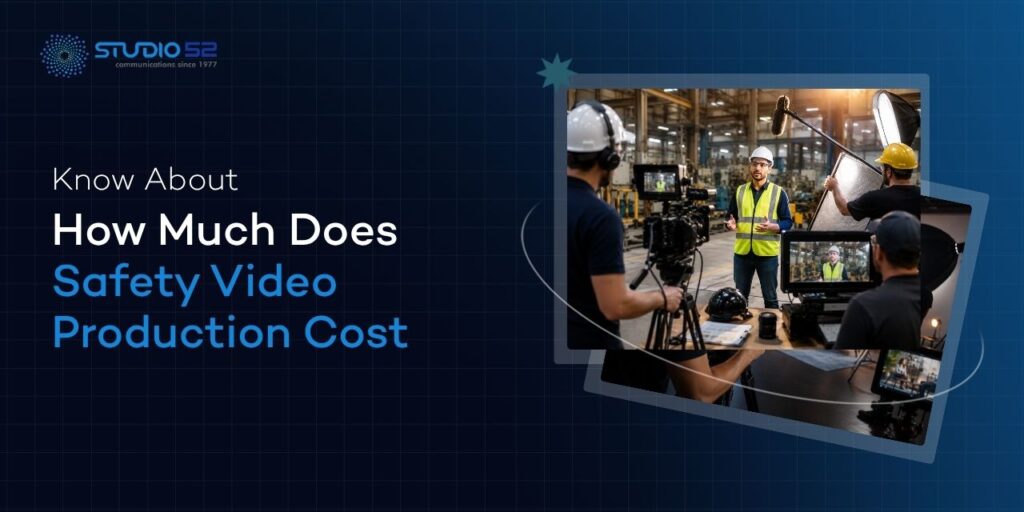

Ask any HSE manager in the Gulf what keeps them up at night, and “the next near-miss” usually tops the list. That’s exactly why safety video production has become such a big deal for businesses across the region. A solid video does what a 60-page manual rarely can. It gets people to actually pay attention.
But here’s the catch. The moment you start exploring options, you’ll notice quotes swing wildly from one studio to another. So what’s behind the price difference? Let’s break it down honestly, without the fluff.
Table of Content
Why Businesses Invest in Safety Videos
Safety posters get ignored. Inductions get rushed. PDFs sit unopened in inboxes. Safety video production solves that problem because people remember what they see far longer than what they read.
In sectors like oil and gas, construction, and manufacturing, even one missed protocol can lead to injuries, lawsuits, or shutdowns. A short, well-scripted video keeps key messages alive on phones, intranets, toolbox talks, and TV screens at site entrances. It also makes onboarding faster, which any operations head will tell you saves real money.
Average Safety Video Production Cost
Honestly, there’s no single answer. Budgets stretch across a very wide range depending on what you’re trying to achieve. A two-minute animated piece for new joiners will sit comfortably at the lower end. A multi-day industrial shoot inside a live plant, complete with drones and post-production effects, lands at the top.
What I’ve seen across the UAE, Saudi Arabia, and Oman is that smart clients don’t chase the cheapest quote. They look for a studio that gets their industry. Permits in Saudi, for instance, work very differently from those in Dubai or Muscat, and that alone affects the bottom line.
Cost Breakdown by Type of Safety Video
Different formats carry different price tags. Here’s a quick look:
- Animated safety videos: Easiest on the wallet. Perfect for explaining things that are too dangerous or impractical to film, like chemical reactions or confined-space hazards.
- Live-action safety training video production: Mid to upper range. Brings authenticity because viewers see their actual work environment on screen.
- Industrial safety video production: The premium tier. Real sites, certified safety officers on standby, special-purpose cameras, and tight coordination with plant operations.
- Safety moment short video: The most affordable option. Ideal for daily briefings, social posts, and quick reminders before shifts begin.
Main Factors That Affect Safety Video Production Cost
A bunch of things move the needle here. Script length is the big one. A focused three-minute clip is far easier on the budget than a layered ten-minute training module covering multiple scenarios.
Then there’s the crew. A two-person team filming an office briefing is one thing. A full unit shooting at an offshore rig with safety stewards, drones, and lighting rigs is another. Talent costs add up too, especially when you need bilingual presenters or trained actors who can convincingly handle PPE on camera.
Location plays a quiet but huge role. Filming inside a working refinery means permits, supervision, and sometimes paused operations. Post-production choices like motion graphics, Arabic and English subtitles, voiceovers in multiple languages, and 4K finishing also pile onto the final figure.
Create impactful industrial 3D animation videos in Dubai to showcase products, processes, equipment, and safety procedures with clear visual storytelling.
Hidden Costs Businesses Often Overlook
This is where most clients get caught off guard. Translation and dubbing into Arabic, Hindi, Urdu, or Tagalog add a meaningful chunk to the budget, but they’re essential in our region’s multilingual workforce.
Music licensing is another sneaky one. So are unlimited revision rounds, HSE review cycles, and last-minute script changes after the shoot wraps. And don’t forget future updates. Safety standards evolve, regulations tighten, and the smart move is to plan for re-edits from day one rather than starting over later.
How to Reduce Safety Video Production Costs
You don’t need to slash quality to save money. A few practical moves go a long way. Bundle multiple short safety videos into one shoot day. Reuse B-roll across modules. Lean on animation where filming isn’t critical. Lock the script before the camera rolls, because reshoots burn budgets faster than anything else.
Picking a local partner also matters more than people think. Studio 52 operates across the UAE, Saudi Arabia, and Oman, so regional shoots stay efficient without ballooning travel and accommodation costs.
Safety Video Production Timeline
Most projects wrap up within three to six weeks. Scripting and storyboarding eat up the first one or two weeks, filming usually takes a couple of days, and post-production takes another two to three. Need it faster? Rush delivery is doable but expect a premium attached.
ROI of Professional Safety Videos
Here’s the part senior management cares about. One serious workplace incident can cost a company a fortune in medical bills, legal fees, downtime, and reputational damage. Compared to that, a polished safety video is a small price for long-term protection.
Add in stronger audit scores, quicker onboarding, fewer repeat training sessions, and better worker engagement, and the ROI gets harder to ignore every quarter.
Industries That Benefit Most from Safety Videos
Some industries simply can’t operate safely without strong visual training. Oil and gas, construction, manufacturing, logistics, aviation, healthcare, and hospitality all lean heavily on safety moment videos and detailed training films. In the Gulf especially, regulators expect documented, verifiable training, and well-produced video content checks that box neatly.
Conclusion
Safety video production isn’t an expense. It’s protection wrapped in a deliverable. Costs vary based on format, complexity, and shoot conditions, but the impact stays consistent. A well-made video keeps people safe, keeps operations running, and keeps your compliance record clean.
Contact Studio 52 today or request a free consultation and custom quote. Let’s build a safer workplace together, one video at a time.
UAE: +971 44541054
Saudi: +966 12 4220506
Email: askus@studio52.tv