
In Dubai’s rapidly expanding media and corporate sectors, the demand for professional dubbing services has never been higher. The city’s unique position as a bridge between Eastern and Western markets, combined with its ambitious media production goals, has created an unprecedented need for high-quality dubbing that resonates with diverse audiences. Whether for streaming platforms, corporate training, advertising campaigns, or video games, the voice that delivers your message can significantly impact its reception, making the choice of dubbing artist a critical business decision.
Selecting the right professional is not merely about finding someone who can speak lines in another language. It is about securing a vocal partner who can breathe authentic life into your content, ensure cultural resonance, and maintain the emotional integrity of your original production. This guide provides comprehensive, actionable tips to help you navigate Dubai’s competitive dubbing landscape and find the perfect artist for your project.
Table of Content
What Does a Dubbing Artist Do?
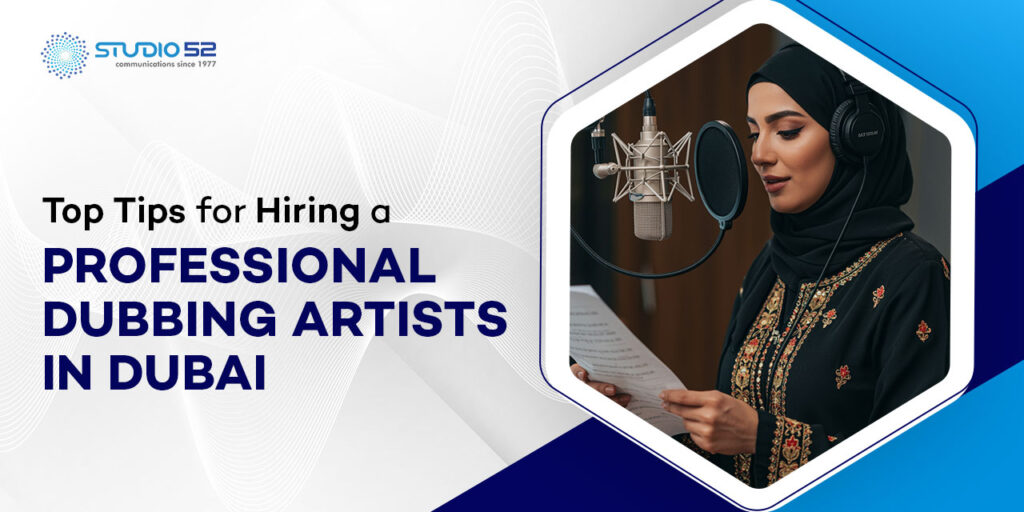
A dubbing artist, also known as a voice-over artists, is a professional performer who replaces the original dialogue in a video production with a synchronized translation in a different language. This intricate process involves much more than simple translation; it requires the artist to match the lip movements of the on-screen character, capture the emotional tone of the performance, and deliver lines with a natural, believable flow that makes the audience forget they are listening to a dub.
Dubbing vs. Voice-Over: Understanding the Difference
While often confused, these are two distinct services:
- Dubbing: The complete replacement of the original vocal track with a new performance in a target language. The goal is perfect lip-sync and emotional congruence, making it appear the actor is speaking the new language. It is used for films, TV series, and animated content.
- Voice-Over: A translated narration that plays over the original audio, which is often lowered in volume. The original speech may still be faintly audible. This is common in documentaries, interviews, and some corporate videos.
Where is Dubbing Used?
The applications for professional dubbing artists in Dubai are vast and growing:
- Media & Entertainment: International films, television series, and streaming content for platforms like Netflix and Starzplay.
- Commercials & Advertising: High-impact TV and radio ads tailored for the UAE and GCC markets.
- E-Learning & Corporate Training: Educational modules and internal training videos for multinational corporations.
- Animation & Video Games: Bringing animated characters and video game personas to life for Arabic-speaking audiences.
- IVR & Telephony: System prompts and messages for businesses, though this is more commonly used for voice-over.
Top Tips for Hiring a Professional Dubbing Artist in Dubai
1 Define Your Project Requirements Clearly
Before you begin your search, you must have a crystal-clear vision of your project’s needs. This foundational step will guide every subsequent decision.
- Language and Dialect: Specify not just the language (e.g., Arabic), but the exact dialect. The difference between Emirati, Khaleeji, Saudi, and Modern Standard Arabic is significant and impacts audience connection. For instance, a real estate ad targeting Dubai locals would benefit immensely from an authentic Emirati dialect.
- Tone and Style: Define the vocal characteristics needed. Is it an authoritative, corporate tone for a bank, an energetic, playful sound for a children’s cartoon, or a soothing, trustworthy voice for a healthcare explainer?
- Target Audience: Understand the demographics and cultural background of your intended viewers. The right artist will know how to pitch the performance to engage that specific group.
2 Check Language & Accent Expertise
Native-level fluency and authentic accent delivery are non-negotiable for quality dubbing. An artist who is merely fluent, but not a native speaker, may miss subtle cultural nuances, idioms, and emotional inflections that make a performance feel genuine.
When targeting the UAE and GCC markets, an artist with expertise in Khaleeji or Emirati Arabic can create a powerful, relatable connection with the audience that a generic Arabic translation cannot achieve. Always verify the artist’s specific dialect specialties.
3 Review Portfolio & Previous Work
A professional dubbing artist will have a demo reel showcasing their range and versatility.
- Listen Critically: Pay attention to the emotional range, clarity of speech, and consistency of their performance across different genres.
- Check for Relevant Experience: An artist proficient in dramatic film dubbing may not be the best fit for a quirky commercial. Look for proven experience in your specific genre, be it corporate videos, commercials, animation, or e-learning.
4 Evaluate Technical Skills & Recording Quality
The best vocal performance can be ruined by poor technical execution. Key technical aspects include:
- Lip-Sync Accuracy: The artist’s ability to synchronize their speech with the on-screen character’s mouth movements is a specialized skill.
- Audio Purity: The final audio should be free from background noise, echoes, and plosives.
- Consistency: The artist must deliver a consistent tone and energy across multiple takes and recording sessions.
5 Consider Professional Studio Support
Hiring an artist through a professional studio like Studio52 offers significant advantages over freelancers. A studio provides end-to-end service, handling casting, recording, editing, sound design, and quality control in a professional, acoustic-grade environment.
Studios also manage the entire project workflow, ensuring reliable turnaround times and giving you a single point of contact, which simplifies revisions and feedback.
6 Discuss Turnaround Time
In Dubai’s fast-paced market, timing is often critical. Be upfront about your deadline.
- Realistic Timelines: Discuss the artist’s or studio’s availability and their proposed schedule. A professional studio will have streamlined processes for efficient delivery without compromising quality.
- Buffer for Revisions: Always factor in time for review and potential revisions to avoid last-minute stress.
7 Compare Pricing & Value
While budget is a key consideration, the cheapest option is rarely the most cost-effective.
- Understand the Quote: Request a detailed breakdown. Does the price include editing, mixing, and a certain number of revisions?
- Avoid Hidden Costs: Be clear about potential extra charges for urgent deliveries, additional revisions, or complex script changes.
- Value Over Price: Investing in a professional artist from a reputable studio ensures high-quality output that protects your brand’s image and maximizes the impact of your content.
8 Check Reviews & Client Feedback
An artist’s or studio’s reputation is one of the most reliable indicators of quality and professionalism.
- Seek Testimonials: Look for reviews on their website or independent platforms.
- Look for Repeat Clients: Long-term relationships with brands are a strong sign of client satisfaction and consistent delivery. Studios like Studio52, which mention being “trusted by 4,000+ brands,” demonstrate a proven track.
9 Request a Custom Sample
The most effective way to know if an artist is right for you is to hear them perform your script.
- Test for Fit: Provide a short segment of your actual script. This allows you to assess voice compatibility, interpretation, and timing specific to your project.
- Evaluate Direction: A skilled artist can take direction and adjust their performance based on your feedback. Use the custom sample to test this collaborative process.
Common Mistakes to Avoid When Hiring
- Hiring Based on Price Alone: Low rates often correlate with inexperience, poor audio quality, and the use of non-native speakers, which can damage your project’s credibility.
- Ignoring Dialect Accuracy: Assuming all Arabic is the same is a grave error. Using an Egyptian dialect for a campaign targeting Gulf audiences can make the content feel foreign and less relatable.
- Skipping the Quality Test: Never finalize a booking without reviewing a sample. This is your final check for audio quality, performance style, and overall suitability.
Why Dubai Is a Hub for Professional Dubbing Talent
Dubai has firmly established itself as a leading media hub for the MENA region, attracting top-tier dubbing talent for several key reasons:
- Multicultural Environment: The city’s diverse population provides access to a vast pool of native speakers for dozens of languages, from Arabic and English to Hindi, French, and.
- World-Class Infrastructure: The presence of state-of-the-art facilities like Studio52 and other high-end studios in Dubai Media City and Studio City ensures that productions meet international technical.
- High Market Demand: Major global streaming platforms, international corporations, and a booming local film and advertising industry create a constant, high demand for quality dubbing.
Why Studio52 Is Your Ideal Partner for Dubbing Artists in Dubai
When your project demands quality, reliability, and cultural authenticity, Studio52 stands out as a premier choice. Here is why:
- Proven Experience: With over 40 years of legacy in the industry, Studio52 brings a depth of expertise that new entrants cannot.
- Vast Talent Pool: We provide access to a large network of professional native dubbing artists specializing in Arabic (including Emirati and Khaleeji), English, and over 30 other languages, ensuring you find the perfect voice.
- Studio-Quality Production: Our advanced, soundproof recording studios in Dubai guarantee crystal-clear audio, perfect synchronization, and a professional finish for every project.
- End-to-End Service: We simplify the process by offering comprehensive services under one roof, from script translation and casting to recording, editing, and final post-production.
- Trusted by Brands: Our portfolio includes collaborations with leading UAE and international brands across sectors like banking, real estate, and telecommunications, a testament to our consistent quality and reliability.
Conclusion
Hiring the right dubbing artist in Dubai is a strategic process that requires careful attention to dialect, technical skill, professional credentials, and cultural fit. By following the tips outlined above, from clearly defining your needs to reviewing portfolios and insisting on a custom sample, you can navigate the local market with confidence and select a vocal artist who will elevate your content and ensure it resonates powerfully with your target audience.
Remember, professional dubbing is an investment in your brand’s communication and audience engagement. It is the key to ensuring your message is not only heard but also felt and remembered.
Ready to find the perfect voice for your project? Contact Studio52 today to hire from our curated pool of professional dubbing artists in Dubai. Let us help you connect, engage, and inspire your audience with authentic and high-impact dubbing services.