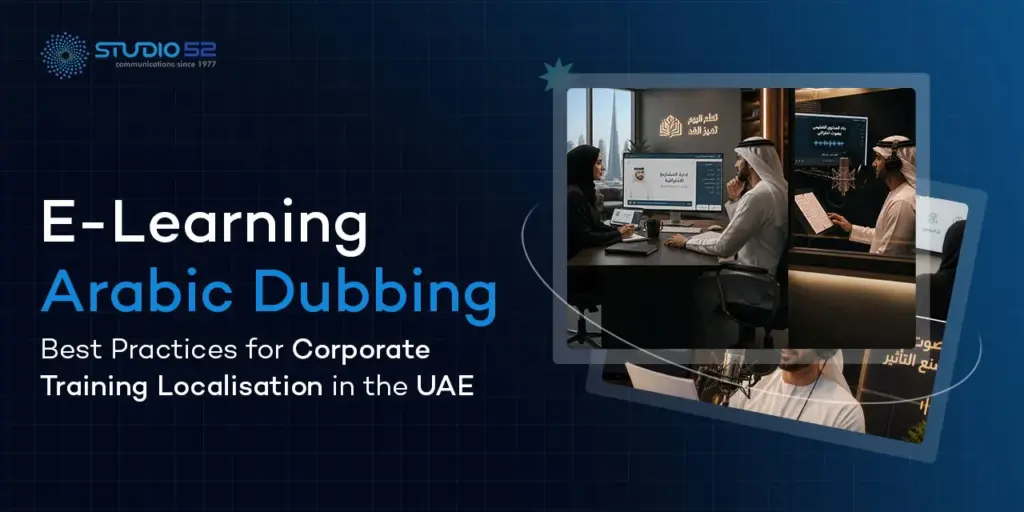

E-learning and corporate training have become central to how businesses in the UAE onboard, upskill, and inform their workforce. As organisations expand across a region with such a diverse, multilingual employee base, delivering training in one language alone is no longer enough.
Multilingual training has become essential for today’s workforce, and e-learning Arabic dubbing plays a key role in making that possible. Dubbing training content into Arabic ensures information is not just translated, but genuinely understood, supporting effective knowledge transfer across every team.
This guide covers what e-learning Arabic dubbing involves, why it matters for corporate training, best practices for localisation, and how to choose the right dubbing partner in the UAE.
Table of Content
What Is E-Learning Arabic Dubbing?
Understanding Arabic Dubbing for Training Content
E-learning dubbing refers to replacing or adding a voice track in Arabic to existing training video or audio content, synchronised with the original visuals. It differs from voice over, which typically layers a translated narration over the original audio, and from subtitles, which display translated text on screen without altering the audio itself. Dubbing offers the most immersive experience, since learners hear the content fully in their own language without needing to read along.
Why It Matters for Corporate Training
Dubbed training content improves learner engagement by removing the friction of processing a foreign language. It also helps organisations deliver consistent training across multilingual teams, ensuring every employee receives the same message with the same level of clarity, which directly supports understanding and compliance with workplace policies.
Why Localise Corporate Training in Arabic?
Reach a Diverse Workforce
With a significant Arabic-speaking workforce across the UAE, localising training content ensures every employee, regardless of background, has access to an inclusive learning experience that does not disadvantage those less comfortable with English.
Improve Knowledge Retention
Learning in one’s native language consistently improves comprehension and retention, particularly for complex or technical topics where nuance matters and misunderstandings can be costly.
Ensure Regulatory and Safety Compliance
Clear communication of workplace policies, safety procedures, and compliance requirements is essential. Arabic dubbing reduces the risk of misunderstandings that could otherwise lead to compliance gaps or workplace incidents.
Benefits of E-Learning Arabic Dubbing
- Higher Employee Engagement
- Better Learning Outcomes
- Consistent Training Across Locations
- Stronger Brand and Employer Reputation
- Increased Course Completion Rates
Together, these benefits point to a clear conclusion: employees are more likely to engage with, understand, and complete training that speaks to them directly in their own language. This, in turn, strengthens an organisation’s reputation as an employer that invests genuinely in its people, across every location and language group it serves.
Discover how custom dubbing solutions in expanding your market reach help businesses connect with global audiences and drive international growth.
Best Practices for Corporate Training Localisation
Use Native Arabic Voice Talent
Native speakers bring natural pronunciation, pacing, and tone that resonates far more effectively than non-native delivery, particularly for training content where clarity is critical.
Choose the Right Arabic Dialect
Selecting between Modern Standard Arabic and Gulf Arabic, where appropriate, depends on the audience and context. Modern Standard Arabic offers broad regional understanding, while Gulf Arabic can add a more local, familiar tone for UAE-based teams.
Adapt Content for Local Culture
Effective localisation goes beyond word-for-word translation, adjusting examples, references, and tone to reflect the cultural context of the audience.
Keep Audio Clear and Professional
Clean, well-mixed audio ensures learners can focus on the content itself rather than struggling with poor sound quality.
Synchronize Audio With Visual Content
Dubbed audio must align closely with on-screen visuals and any existing captions or animations, so the learning experience feels seamless rather than disjointed.
Perform Quality Assurance Before Launch
A thorough review process, checking translation accuracy, audio quality, and synchronisation, helps catch issues before training content reaches employees.
Types of Corporate Training That Benefit From Arabic Dubbing
Arabic dubbing adds value across a wide range of training categories, including employee onboarding, health and safety training, compliance training, technical skills development, product and sales training, and leadership and soft skills courses. In each case, dubbing helps ensure the material is fully understood rather than partially interpreted.
Arabic Dubbing vs Subtitles: Which Is Better?
Advantages of Arabic Dubbing
Dubbing allows learners to absorb content without splitting attention between visuals and text, making it especially effective for training that includes demonstrations or complex on-screen processes.
When Subtitles Are Suitable
Subtitles can work well for shorter, simpler content, or where budget constraints make full dubbing impractical, though they place more cognitive load on the learner.
When to Combine Both for Better Learning
For learners who benefit from reinforcement, combining dubbed audio with subtitles in the same or another language can support accessibility and comprehension simultaneously.
How to Choose the Right Arabic Dubbing Company in the UAE
- Native Arabic Voice Artists
- Experience in Corporate Training
- Broadcast-Quality Recording
- Script Translation and Localisation Support
- Fast Turnaround and Quality Control
A strong Arabic dubbing partner should offer access to native voice artists, proven experience with corporate training content specifically, broadcast-quality recording facilities, support for script translation and localisation, and a reliable process for fast turnaround without compromising quality control.
Common Mistakes to Avoid
- Literal Translation Without Localisation
- Choosing the Wrong Arabic Dialect
- Poor Audio Quality
- Ignoring Cultural Nuances
- Using AI Voices Without Human Review
Many localisation projects fall short not because of the translation itself, but because of these avoidable missteps. Literal translations can miss meaning entirely, the wrong dialect can alienate part of an audience, and unreviewed AI-generated voices often lack the nuance needed for sensitive or technical training material.
Future Trends in E-Learning Localisation
- AI-Assisted Learning Content
- Interactive Training Modules
- Personalized Learning Experiences
- Growing Demand for Arabic Digital Learning
As AI tools continue to support faster production, and as demand for interactive, personalised learning grows, the need for high-quality Arabic digital learning content is only expected to increase across the UAE and wider GCC region.
Conclusion
Arabic dubbing is essential for creating effective, engaging, and culturally relevant corporate training content in the UAE. By localizing e-learning materials with professional Arabic voice talent, businesses can improve employee understanding, increase training completion rates, and ensure consistent communication across multilingual teams.
Localise Your Corporate Training With Professional Arabic Dubbing
Empower your workforce with clear, engaging, and culturally relevant training content. From onboarding videos and compliance modules to technical and leadership training, professional Arabic dubbing helps your employees learn with confidence.
Contact Studio52 today to discuss your e-learning Arabic dubbing requirements and create impactful training content for the UAE and GCC markets.