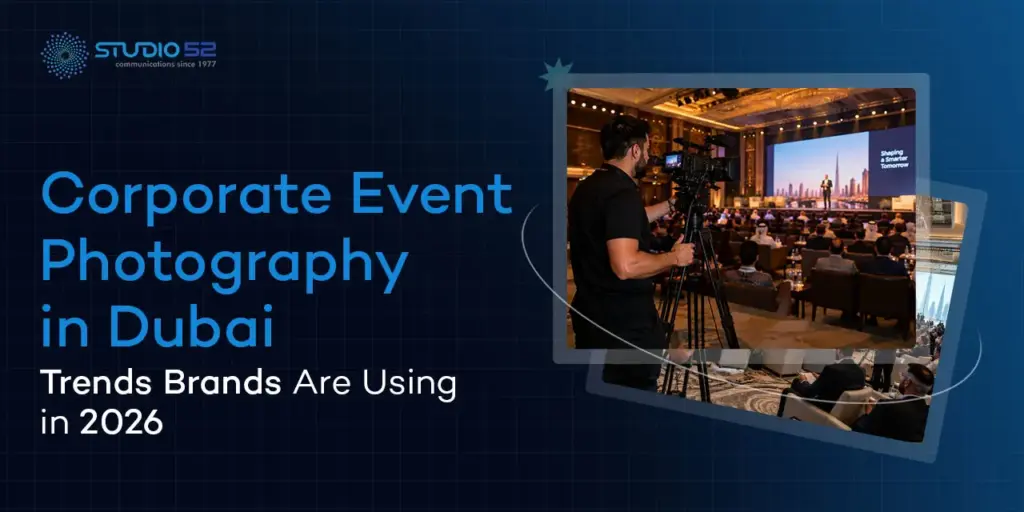
Corporate event photography in Dubai has changed. Brands now use visual media with a sharp commercial strategy. The standard corporate event photos that Dubai companies used in the past no longer deliver results. Businesses previously accepted generic group poses and static backdrop pictures. Leading brands treat event photos as high-impact marketing assets.
The old formula — line everyone up, smile, shoot — no longer cuts it. Marketing teams want active visual content that tells real stories. The approach is faster, more visual, and built for real content use. The photos need to work on LinkedIn, in press kits, on Instagram Stories, and in internal reports — all from the same shoot.
They need images that capture raw human emotions, audience reactions, and event energy. Traditional photography fails to build engagement on modern digital platforms. Audiences scroll past staged handshakes and rigid group photos.
This shift changes how companies plan event coverage in 2026. Top regional businesses demand fast, strategic, and flexible visual coverage. The post breaks down the trends driving corporate event photography in Dubai this year and what they mean for how brands plan their events.
Table of Content
Candid, Documentary-Style Storytelling Over Posed Shots
The biggest shift? Brands are ditching posed photography.
Instead, photographers capture events as they happen. Real conversations. Genuine audience reactions. A speaker mid-sentence. The team celebrating a product launch in the moment.
This approach works better on social media because it looks real. Audiences scroll past polished, staged content. They stop for photos that feel like something actually happened.
Audience members respond in real time during live keynote presentations. Panellists join lively debates on stage. Colleagues laugh during informal networking breaks. The real-time exchanges make better stories than any posed photo could tell on stage.
Documentary-style event photography Dubai agencies deliver requires exceptional technical skill. Photographers must anticipate reactions before they occur. They blend quietly into the crowd without interrupting conversations. They look for subtle expressions, natural laughter, and sharp focus.
Brands use these candid captures across all corporate marketing channels. The final images show real organisational energy, active participation, and genuine event value.
Same-Day and Real-Time Content Delivery
Speed has become a non-negotiable. Brands cannot wait two weeks for photo edits after an event ends. Event news loses market impact if photo delivery takes too long. Digital news cycles move within hours now. Today, brands expect a social-ready selection within hours. Sometimes before the event even wraps.
This matters most when the event is tied to something time-sensitive — a product launch, a press announcement, a partnership reveal. Post it that evening, and you catch the moment. Post it four days later, and the story has already moved on.
Same-day content delivery is now a real differentiator when choosing an event photography team. Not every team can execute it well. It requires fast editing workflows, clear handoff processes, and a photographer who knows which shots to prioritise on the floor.
Real-time photos boost social media engagement significantly. Attendees share live event posts while their personal excitement remains high. Corporate PR teams send fresh photo packages to news outlets immediately. Immediate publishing maximises earned media coverage and online visibility.
If content turnaround matters to your brand — and in Dubai’s market, it usually does — ask about same-day event coverage service options before you book.
Photography Built for Multi-Platform Use
One event. Six different content needs. A single event shoot must serve many distinct marketing channels today. Brands need imagery for a range of internal and external platforms. Also, a single photo orientation no longer meets complete marketing demands.
A LinkedIn post needs a clean horizontal crop. An Instagram story needs a vertical frame. A website banner needs width. A press release needs a neutral, professional image. An internal newsletter needs something that shows team engagement.
Brands now brief photographers on all of this upfront—not as an afterthought after the shoot.
This changes how photographers work on the floor. They’re thinking about framing and composition with distribution in mind from the first shot. Wide establishing shots. Tight portrait crops. Vertical angles for Stories. Horizontal frames for banners.
Smart marketing managers share media distribution plans with photo crews early. The master shot list includes specific layout notes for every platform:
- Vertical compositions for mobile video reels and social stories
- Ultra-wide horizontal angles for website headers and stage screens
- Square frames for social media feeds and executive profile posts
- Medium horizontal shots for corporate press releases and newsletters
If your photographer doesn’t ask about your platforms before the event, that’s a gap. The shot selection during the event directly affects how much you can do with the content afterwards.
Branding-Integrated Photography
Sponsors want proof. Leadership wants collateral. Marketing wants content that extends the event’s shelf life. Branding at corporate events extends far beyond simple logo walls. Modern companies integrate visual branding into every frame naturally. Photographers avoid awkward, forced shots in front of plain step-and-repeat banners.
That’s pushed brands to be more intentional about how branded elements appear in photos. Step-and-repeat backdrops, event signage, product displays, and logo placements are all being captured — but the goal is for them to look natural, not like an ad.
This takes planning. It’s not about photographing every banner in the room. It’s about capturing branded moments in context — a speaker in front of the logo, a product visible in the background of a genuine conversation, signage framed behind an engaged audience.
High-quality corporate event photography in Dubai builds long-term visual asset libraries. Companies store these branded assets in central media servers. Marketing teams reuse the images across annual reports, sales decks, and client case studies for months.
This content gets long-term use. Sponsor reports. Case studies. Award submissions. Future pitch decks. The corporate event photography Dubai brands invest in now often shows up in marketing materials for the next two years.
Combined Photography + Videography Crews
Booking two separate vendors — one for photography, one for video — is becoming less common.
Brands are moving toward integrated crews that handle both. The reasons are practical. Booking separate photography and video vendors creates unnecessary operational stress. Uncoordinated crews often compete for physical space near the stage. They may use conflicting lighting equipment or deliver inconsistent visual styles.
A combined team gives you a consistent visual style across formats. The photo and video content look like they came from the same event because they did. Both were shot with the same brand direction in mind. Logistics are simpler. Communication is cleaner. And when both teams are coordinated, they don’t work against each other on the floor.
It also makes the content work better together. A photo for LinkedIn. A video clip for Instagram. Both from the same keynote moment. Both styled consistently.
- This unified structure offers clear business benefits
- Consistent colour grading across all published photos and video clips
- Single point of contact for clear communication and scheduling
- Reduced foot traffic around key speakers and stage areas
- Better coordination between camera operators in tight spaces
- Integrated media packages prepared for immediate multi-channel publishing
If you’re weighing how to structure your event coverage, it’s worth reading how photography and videography work together for event coverage in Dubai before deciding.
Read: Event Coverage in Dubai: Photography vs Videography vs Both
Photography as Part of a Long-Term Content Strategy
One-off event coverage has its place. But forward-thinking brands are thinking bigger.
Forward-thinking organisations do not view event photography as a single task. They treat every corporate gathering as a key content generation opportunity. Companies build extensive media libraries over time across multiple annual events.
They’re building a visual library across every event — conferences, internal offsites, client dinners, product launches. Consistent photography style. Consistent quality. Consistent brand feel across every touchpoint.
Over time, this library becomes an asset. You have imagery for every channel, every campaign, every report. You’re not scrambling for content before a pitch. You already have it.
This also strengthens brand recognition. When your event photography looks consistent from one year to the next, it signals stability and professionalism — to clients, partners, and prospective talent.
Planning your corporate event coverage as a rolling content strategy, not a one-off expense, changes how much return you get from each shoot.
How to Upgrade Visual Strategy for Your Next Dubai Event
The brands getting the most value from their event photography aren’t treating it as a checkbox. They’re treating it as a content investment.
Corporate events demand heavy financial investments and strategic preparation. Treating event coverage as an afterthought wastes significant brand-building opportunities. Dubai companies that adopt modern photography trends get far greater return on their event spend.
They brief photographers on platforms, moments, and brand priorities before the event. They expect fast delivery. They want content that works across formats.
Prioritise candid storytelling, fast delivery times, and multi-platform framing. Hire a skilled event photographer in Dubai leaders trust to execute this strategic approach.
Invest in a corporate event photographer in Dubai that businesses rely on to remain competitive in 2026.
Ready to Update Your Event Photography Approach?
The trends shaping event photography in Dubai this year are clear — faster delivery, more authentic storytelling, and content built for real-world use across every platform.
Studio52 works with brands across Dubai and the GCC to deliver corporate event photography that does more than document. It builds content your team can actually use.