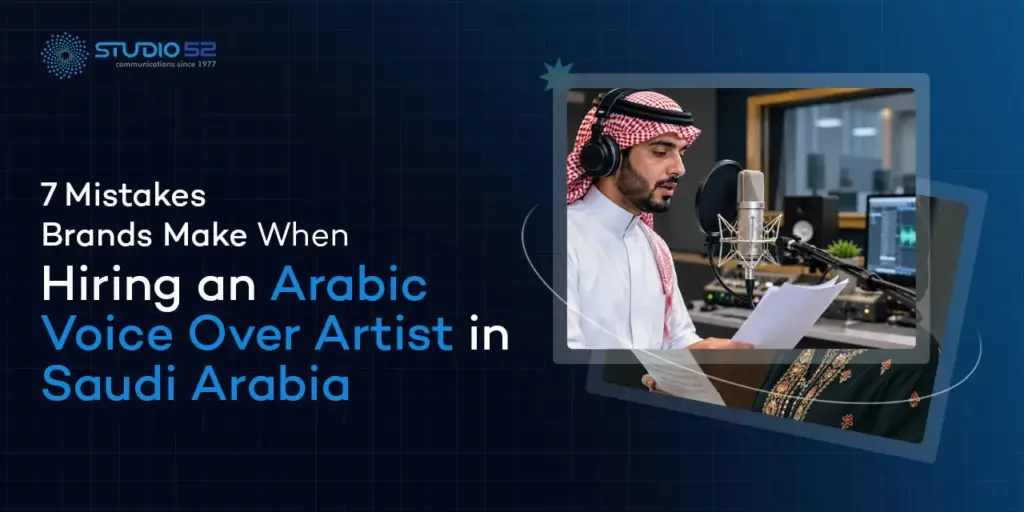
If you have ever launched a campaign in Saudi Arabia and wondered why the audience didn’t engage, take a close look at the voice over.
In the Saudi market, listeners have a sharp ear for authenticity. A voice that sounds slightly imported, overly dramatic, or off-dialect immediately creates distance between your brand and the viewer. People skip the ad, tune out the corporate video, or worse, assume your company doesn’t truly understand the local culture.
After working on hundreds of Arabic audio and video productions across Riyadh, Jeddah, and Dammam, we have seen the same casting and production errors stall great campaigns. Here are seven mistakes companies routinely make when hiring an Arabic voice over artist in Saudi Arabia, along with how to avoid them.
Table of Content
1. Assuming “Gulf Arabic” Works Everywhere in Saudi Arabia
One of the easiest traps to fall into is booking a generic Khaleeji voice artist based in Dubai or Kuwait and assuming the accent will blend right into Saudi Arabia. To a non-native ear, Gulf dialects might sound similar. To a Saudi listener, the difference in rhythm, word choice, and pronunciation stands out within three seconds.
Even within Saudi Arabia, dialect choice matters. Using formal Modern Standard Arabic (Fusha) for a casual retail promo makes your brand sound stiff and distant. On the flip side, heavy regional slang can alienate audiences outside that specific province. For nationwide corporate, banking, or telecom campaigns, a clean White Saudi (Najdi-neutral) accent usually hits the sweet spot. If your brand is targeting lifestyle, food, or entertainment consumers in Jeddah and the Western Region, a warmer Hijazi delivery tends to connect much faster. Reserve Fusha strictly for official government notices, documentaries, or pan-Arab institutional announcements.
2. Bringing Old-School Radio Energy to Vision 2030 Projects
Traditional Middle Eastern advertising relied heavily on loud, theatrical announcer voices. Today, that style feels dated, especially in Saudi Arabia’s rapidly modernizing business landscape.
When companies produce videos for Vision 2030 initiatives, public-private partnerships, or B2B tech platforms, an overly dramatic hard-sell read feels completely out of place. Modern Saudi decision-makers respond much better to calm, grounded, and confident storytelling. Timing on the calendar also changes how a script should sound. A spot airing during Ramadan calls for a slower, more reflective warmth, while campaigns around Saudi National Day or Founding Day need genuine pride and momentum without turning into melodrama.
3. Skipping Pronunciation Checks on Local Names and Titles
Even fluent Arabic speakers can trip over Saudi tribal surnames, local districts, or specific ministerial titles if they haven’t worked with KSA scripts regularly. Mispronouncing a place like Diriyah or stumbling over an official program name doesn’t just sound sloppy; it hurts your brand’s credibility in front of local stakeholders.
Never send a raw Arabic script straight into the recording booth. Have a native Saudi copy editor review the text first and add diacritics (Tashkeel) to any words that could be misread. Sending a quick phonetic guide or voice note for tricky names before the session saves hours of frustrating retakes later.
4. Casting Based on a Generic Showreel
A voice actor can sound incredible on a high-energy automotive commercial and completely flat on an automated customer service IVR menu. Judging talent purely on a general demo reel is a gamble.
Always ask for samples that match your exact format, whether that is e-learning, corporate narration, animation, or social media ads. Better yet, ask shortlisted artists to record a quick 20-second custom sample using three or four lines from your actual script. Hearing how they handle your brand’s real words tells you far more than a polished demo ever could.
If you are still figuring out your project’s basic audio requirements, check out our complete guide on what to know before hiring an Arabic voice-over artist.
5. Choosing the Cheapest Quote Over Studio Acoustics
Budget matters on every production, but picking the lowest freelance rate often ends up costing more in post-production. A talented voice actor recording in an untreated bedroom will still give you subtle room echo, sharp plosives, or faint air-conditioner hum. Those flaws might go unnoticed on a phone speaker, then become glaringly obvious once your editor mixes the audio for a boardroom presentation or cinema screen.
Before you book, ask about their studio setup and microphone chain, or partner with an established voice over company in Saudi Arabia where live direction, acoustic control, and final mastering are handled in a proper studio environment.
6. Forgetting KSA Broadcast and Paid Media Usage Rights
A surprisingly common headache happens weeks after recording wraps. A marketing team negotiates a flat session fee with a freelancer, only to realize later that the quote only covered organic social media posts. The moment media buyers put paid ad spend behind the video on YouTube, Snapchat, TikTok, or Shahid, the brand runs into licensing disputes.
Clarify your exact media plan before the session begins. If your campaign will run on Saudi TV networks like MBC, local radio, cinema pre-roll, or digital screens in places like Riyadh Boulevard or major airports, make sure a clear 6-month or 12-month commercial buyout is written into the agreement upfront.
7. Ignoring Revision Terms and Long-Term Consistency
In Saudi enterprise and government workflows, final script approval often passes through several departments. It is very normal for a client to request a small wording tweak after hearing the first rough cut of the video. If your contract doesn’t cover pick-ups, a two-sentence change can turn into an unexpected re-booking fee.
Lock in at least one round of minor script revisions before recording starts. It is also smart to check whether the voice artist is available for ongoing work. Keeping the same voice across your launch film, IVR system, and future quarterly updates builds real brand recognition over time.
Need the Right Saudi Voice for Your Next Project?
Finding a voice that sounds genuinely local, fits your brand’s personality, and comes with clear commercial licensing shouldn’t slow down your production schedule. At Studio52, we match your script with vetted native Saudi voice talent, handle live remote direction, and deliver broadcast-ready audio on time.
Explore our Arabic voice over services in Saudi Arabia or send over your script for custom voice casting samples and a quote.
Conclusion
The voice not only reads the script but is also a representation of your brand in front of the target market.
By avoiding these seven errors, your brand remains credible and saves a lot in your production budget. Pick the correct dialect, select the voice that matches your brand tone, and verify all technical terms before proceeding.
The skilled Arabic voice actor from Saudi Arabia ensures consistency in audio production with each project you undertake.
Find the Right Arabic Voice for Your Brand
Send us your script, the audience you target, and information about your project.
Studio52 finds the most suitable Saudi Arabic voice over for your brand in any format.
Request a quote for Arabic voice over services in Saudi Arabia!
Frequently Asked Questions
1. Which Arabic dialect works best for marketing campaigns in Saudi Arabia?
For nationwide campaigns across Riyadh, Jeddah, and Dammam, a White Saudi (Najdi-neutral) accent is usually the safest and most relatable choice. If your product or retail campaign focuses specifically on Jeddah and the Western Region, a Hijazi accent feels warmer and more conversational. Modern Standard Arabic (Fusha) is best saved for formal government announcements, documentaries, or pan-Arab corporate videos.
2. Can I hire a Gulf (Khaleeji) voice-over artist from Dubai or Kuwait for a Saudi project?
While Gulf dialects share some similarities, Saudi listeners can immediately tell the difference in rhythm, vocabulary, and pronunciation. If your target audience is inside Saudi Arabia, working with a native Saudi voice artist will always build stronger trust and sound far more authentic than a generic Gulf read.
3. How much does it cost to hire an Arabic voice-over artist in Saudi Arabia?
Pricing depends on the length of your script, the voice artist’s experience, studio production needs, and where the final audio will air. A short internal training video costs significantly less than a nationwide commercial running on TV, radio, or paid social media, because broadcast and paid ads require commercial usage rights.
4. Do standard voice-over fees include TV, Shahid, and paid social media rights?
Usually, no. A base recording fee typically covers organic web use, such as your company website or non-promoted social media posts. If you plan to run paid ads on YouTube, Snapchat, TikTok, Shahid, MBC, or public digital screens, you will need to agree on a 6-month or 12-month commercial buyout upfront.
5. How can I make sure the voice artist pronounces Saudi names and terms correctly?
Always have a native Saudi copywriter review your final Arabic script and add diacritics (Tashkeel) to any words that could be read two ways. Sending a short voice note or phonetic guide for local district names, family surnames, and Vision 2030 program titles before recording starts will save time and prevent costly retakes.