
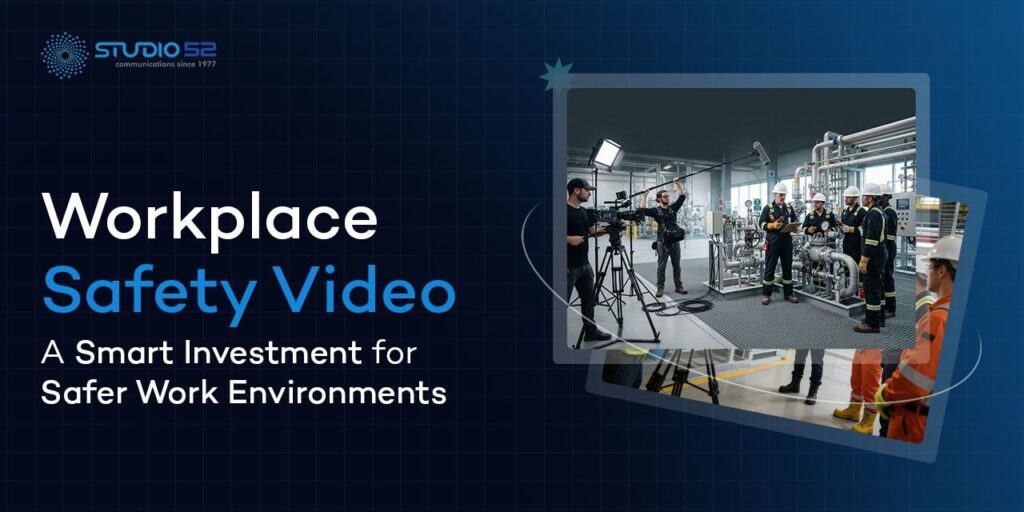

A safety manual sitting on a shelf rarely stops an accident from happening. A workplace safety video does. This blog explores why more UAE businesses are switching to video training and the benefits it delivers. It also covers the industries that need it most and what makes a training video employees remember instead of skipping.
Ask any site manager in Dubai or Abu Dhabi how many people actually read the safety manual cover to cover. You’ll probably get an awkward laugh. Most manuals end up in a drawer somewhere, opened only when an auditor asks for them. A safety video production works differently. It puts real risks, real consequences, and real fixes in front of employees in a way they can’t skim past. That difference matters more than most companies realise. This is especially true in a region where construction, oil and gas, and logistics dominate the economy.
Table of Content
Why Every Workplace Needs More Than Just a Safety Manual
Here’s the thing about written policies, nobody learns a physical skill by reading about it. You can describe how to lock out a machine before maintenance in three paragraphs. Or you can show it in fifteen seconds and have it actually stick. That’s the gap workplace safety training videos fill. They take rules that sound abstract on paper. They turn them into something an employee can picture themselves doing on their own shift. Firms that combine a manual with video content tend to see faster onboarding. They also experience fewer “I didn’t know that” moments during audits.
The Hidden Cost of Unsafe Workplaces
The obvious cost of an accident is the medical bill. The costs nobody budgets for are the ones that follow, insurance disputes, stalled production, damaged machinery, and a workforce that’s suddenly a lot more nervous around the equipment they use every day. On a construction or oil and gas site, one incident can shut things down for weeks. That’s exactly why so many companies have started using workplace accident safety videos as a preventive step rather than something they scramble to produce after an inspection flags a gap. Safety videos for work aren’t a nice extra anymore, they’re closer to insurance for your people and your budget.
Why Workplace Safety Videos Work So Well
There’s a reason a thirty-second clip of someone using a ladder wrong, then right, sticks in your head longer than a page of instructions. Our brains are simply wired for visuals. Safety training videos for employees let a company show tone and urgency in a way that text can’t, like a raised voice, a close call, or a supervisor stepping in at the right moment. Done well, this turns a policy nobody reads into a scene nobody forgets.
10 Powerful Benefits of Workplace Safety Videos
- Fewer accidents. When people can actually picture a hazard before they walk into it, they tend to avoid it.
- More confident employees. Watching a procedure done correctly, more than once if needed, takes the guesswork out of a stressful moment.
- Better retention. People forget most of what they read within a week. Video sticks around a lot longer, especially when the scenario feels familiar.
- A stronger safety culture. Investing in training videos says something to your team, it tells them leadership actually cares, not just ticks a compliance box.
- Easier regulatory compliance. Health and safety videos give you a documented, repeatable way to prove training happened, which UAE regulators increasingly expect.
- Less time spent training. One video, watched by hundreds of employees, beats running the same in person session over and over.
- Lower costs down the line. Fewer accidents means fewer claims, less downtime, and a lot less spent patching up equipment or paperwork after the fact.
- Better productivity. Teams that know exactly what to do move faster and hesitate less, which shows up in output.
- Simpler explanations for complicated procedures. Chemical handling or machinery operation is far easier to grasp when you can watch it happen instead of reading a checklist.
- A better reputation. Clients and regulators notice which companies take safety seriously, and it shapes how they’re viewed across the industry.
Types of Workplace Safety Videos Every Business Should Know
Not every safety video looks the same, and honestly, most businesses need more than one type. Employee induction videos cover the basics on day one, exits, reporting lines, who to call. Fire safety videos for workplace settings walk through evacuation routes and extinguisher use, something every UAE building needs regardless of industry. PPE training videos show correct use of helmets, harnesses, and gloves, while equipment operation videos cover the machinery side of things. Construction safety videos deal with scaffolding and height work, chemical handling videos cover storage and spill response, and warehouse safety videos focus on forklift movement and pedestrian zones, an area that causes more near misses than most people expect.
Which Industries Benefit the Most?
Construction, manufacturing, and oil and gas sit at the top of the list, mostly because the margin for error is so thin. It’s no surprise these sectors are the biggest users of industrial safety videos. Logistics and warehousing follow close behind, given how much vehicle and pedestrian traffic moves through a single shift. Healthcare facilities lean on video for infection control, hospitality businesses use it for fire drills and kitchen safety, and even corporate offices benefit from evacuation and ergonomic content. Utilities and energy companies, dealing with high voltage work and confined spaces, arguably need it more than anyone.
Animated vs Live Action Safety Videos, Which One Should You Choose?
Live action footage works best when you want employees to recognise their own site, their own equipment, and their own colleagues on screen. But some scenarios simply can’t be filmed safely, a gas leak, an electrical fault, a structural collapse. That’s where a custom AI animation video earns its place. Animation lets you show a dangerous situation without putting anyone near the actual danger, and it’s often far better at breaking down technical processes that would be impossible to capture on camera. Plenty of UAE companies now use both, live footage for the environment employees already know and animation for the scenarios that are too risky to stage.
The Ingredients of an Effective Workplace Safety Video
Every good safety video starts with a script written in language people actually use, not corporate jargon lifted from a policy document. Scenarios need to feel like they could happen on that exact site, not a generic stock scenario shot somewhere else entirely. Lighting, audio, and narration matter more than most people assume, a video that looks and sounds cheap undermines the message no matter how accurate the content is. And the best ones end with something concrete, a checklist or takeaway employees can apply the next time they’re on the floor.
Behind the Scenes, How Professional Workplace Safety Videos Are Created
Most projects start with a site visit, walking the floor, talking to supervisors, and understanding what’s actually gone wrong before. From there it moves into scriptwriting, storyboarding, then filming or animation, followed by voiceover recording. A good production team also loops in the client’s safety officers along the way, checking that every procedure shown on screen matches what’s actually required, not just what looks good on camera.
Common Safety Video Mistakes That Reduce Employee Engagement
A video that runs too long loses people fast, and one packed with jargon loses them even faster. Generic stock footage that doesn’t match the actual worksite tends to feel disconnected, and employees notice. Probably the biggest mistake, though, is treating the video as a one off project. Equipment changes, regulations shift, and a video that was accurate two years ago might now be showing outdated procedures without anyone realising.
Safety induction video production creates powerful visual training solutions that simplify safety guidelines and support safer workplace environments.
How to Measure the Success of Your Workplace Safety Video
Completion rates and quiz scores are a start, but the real number to watch is incident reports before and after rollout. Talk to employees directly too, feedback often reveals whether the content actually felt relevant or just checked a box. If near miss reports start dropping, that’s usually the clearest sign the training is doing its job.
Why Professional Safety Video Production Is Worth the Investment
It’s tempting to shoot something quick in house with a phone camera, but it rarely holds attention the way it needs to. Professional production brings scriptwriting that actually lands, proper filming or animation equipment, and a level of polish that makes people take the content seriously. Given what’s actually at stake, employee safety, compliance, reputation, the cost of getting it right is small compared to what a single accident could cost instead.
Conclusion
A workplace safety video isn’t a box to tick anymore, it’s a practical way to protect people, budgets, and reputations at the same time. From cutting down on accidents to building a culture where safety actually gets taken seriously, the impact spreads across every part of a business. Companies across Dubai, Abu Dhabi, and the rest of the UAE that invest properly in video training tend to be the ones best prepared when things don’t go to plan.
Still relying on a manual nobody reads? Studio52 produces workplace safety videos built around your actual site, your actual risks, and your actual team, from live action shoots to custom AI animation video work for scenarios too dangerous to film. Reach out to Studio 52 and let’s build training your employees will genuinely remember.
UAE: +971 44541054
Saudi Arabia: +966 12 4220506
Email: askus@studio52.tv