
Safety videos revolutionize workplace training through visual communication that surpasses written materials in retention and impact. These “silent teachers” deliver consistent messages across diverse workforces, demonstrate hazardous scenarios safely, and create emotional connections that drive behavioral change—resulting in measurable accident reductions and stronger safety cultures.
Words can inform, but images transform. In the high-stakes world of workplace safety, this distinction becomes literally life-saving.
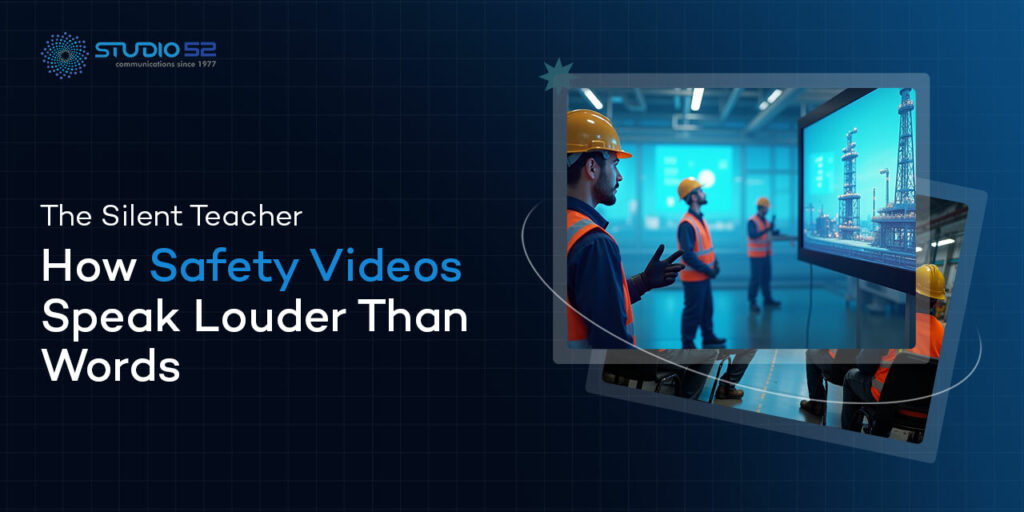
Enter the silent teacher: safety video services that communicate critical information through visual storytelling, demonstrating rather than describing, showing instead of telling. These powerful tools transcend language barriers, capture wandering attention, and create lasting impressions that text-based materials simply cannot achieve.
The science supports what safety professionals increasingly recognize, visual learning creates stronger neural pathways, improves knowledge retention by up to 75%, and drives the behavioral changes necessary for genuinely safer workplaces. As organizations worldwide seek more effective approaches to worker protection, professional workplace safety videos emerge as essential infrastructure rather than optional enhancements.
Table of Content
The Evolution of Safety Communication
Digital technology democratized video production while exponentially increasing its effectiveness. Modern safety training videos incorporate animation, slow-motion analysis, multiple camera angles, and interactive elements that were impossible or prohibitively expensive in analog eras. Simultaneously, distribution evolved from physical media requiring shipping and storage to instant global access through cloud platforms and mobile devices.
Today’s health and safety video content represents the culmination of decades of communication evolution, combining pedagogical research, production technology, and delivery infrastructure that ensures every worker receives consistent, engaging, and memorable safety training regardless of location or language.
Why “Silent Teaching” Works Better Than Words
Human brains process visual information 60,000 times faster than text. This neurological reality explains why short safety videos often accomplish in minutes what pages of written procedures fail to achieve in hours. The visual cortex comprises approximately 30% of brain mass compared to 8% for touch and 3% for hearing, `evolution optimized humans for visual learning.
Cognitive Load Management: Written safety materials overwhelm working memory with simultaneous demands: decoding text, constructing mental images, and connecting concepts to real-world applications. Video presents information pre-processed into visual form, reducing cognitive load and freeing mental resources for comprehension and retention rather than translation.
Universal Communication: A forklift backing up, a worker donning PPE correctly, or an emergency evacuation looks identical regardless of viewer language. While narration and captions enhance understanding, the visual narrative communicates core concepts universally, critically important in today’s multinational workforces.
Emotional Engagement: Movement, music, facial expressions, and narrative structure activate emotional responses that cement memories far more effectively than factual presentation. Workers who emotionally connect with safety content—perhaps seeing themselves or colleagues in scenarios—internalize messages at deeper levels than intellectual understanding alone provides.
Demonstration Superiority: Procedures described verbally or in writing require mental translation into physical actions. Video demonstrates actual movements, positions, and sequences—providing the visual template workers replicate in real situations. This directness eliminates interpretation errors that plague text-based instructions.
Attention Capture and Maintenance: Static text competes poorly against workplace distractions and natural attention drift. Professional safety training video production company content employs pacing, visual variety, and narrative momentum that maintains engagement throughout critical safety messages.
Explore the 7 Best Workplace Safety Videos designed to boost awareness and prevent accidents. Transform your training with clear, engaging, and memorable visuals.
The Business Case: ROI of Safety Videos
Financial justification for safety & training video production investments extends far beyond accident prevention, though that alone often justifies costs. Comprehensive ROI analysis reveals multiple value streams:
Training Efficiency: Organizations report 40-60% reductions in training time requirements when transitioning from text-based to video training. Compressed timelines mean workers reach productive capacity faster while training personnel handle larger volumes with existing resources.
Consistency and Quality Control: Every worker receives identical training regardless of instructor variability, mood, or experience level. This consistency eliminates the lottery of training quality where outcomes depend on which instructor or shift a worker happens to encounter.
Scalability Without Marginal Costs: Initial production investment enables unlimited replications. Training 100 workers costs the same as training 10,000—a dramatic departure from instructor-led approaches where each additional trainee represents incremental costs.
Reduced Incident Costs: Companies implementing comprehensive video-based safety training document accident reductions of 35-55%. Consider that the average workplace injury costs employers $42,000 (direct and indirect costs), and preventing just a handful of incidents justifies substantial video production investments.
Compliance Documentation: Professional safety videos provide auditable records demonstrating training completion, supporting regulatory compliance, and defending against liability claims. This documentation proves invaluable during investigations or legal proceedings.
| Investment Element | Traditional Training | Video-Based Training |
| Per-learner cost (at scale) | High (instructor time) | Very low (viewing only) |
| Consistency | Variable | Perfect |
| Accessibility | Limited (scheduled sessions) | Unlimited (on-demand) |
| Language adaptation | Expensive (translator needed) | Moderate (dubbing/subtitles) |
| Update costs | Low (just tell instructors) | Moderate (re-production) |
Types of Safety Videos That Speak Without Speaking
Procedural Demonstrations: Step-by-step visual walkthroughs of proper techniques—from equipment operation to PPE donning- provide reference materials that workers consult before performing infrequent tasks. These best safety training video examples eliminate uncertainty about correct procedures.
Hazard Recognition: Videos that illustrate workplace dangers help workers develop the pattern recognition necessary to identify risks before incidents occur. Slow-motion footage reveals split-second hazard developments invisible to real-time observation.
Scenario-Based Learning: Dramatic recreations of incidents—showing both incorrect approaches leading to accidents and proper techniques preventing them—create memorable learning experiences. These narratives make abstract risks concrete and personal.
Equipment Close-Ups: Macro photography and animation reveal machine components, safety mechanisms, and failure modes impossible to observe during normal operations. This visibility builds understanding of why procedures matter and what happens when they’re ignored.
Silent Process Videos: Content relying entirely on visual communication without narration proves particularly valuable for diverse workforces. Universal visual language transcends literacy and language barriers while maintaining full comprehension.
Emotional Storytelling: The Secret Ingredient in Safety Communication
The most effective workplace safety videos recognize that behavior change requires emotional engagement, not just intellectual understanding. Neuroscience reveals that emotions create stronger memory encoding than facts alone—a principle sophisticated safety communicators leverage deliberately.
Relatable Characters: Videos featuring workers similar to the target audience—in appearance, role, and challenges—create identification that personalizes safety messages. Workers see themselves in scenarios, making hazards feel personally relevant rather than abstract possibilities.
Narrative Arc: Story structure with characters, challenges, and resolutions maintains attention while making safety content memorable. A worker facing a decision, experiencing consequences, and learning lessons creates narrative momentum that pure instruction cannot achieve.
Authentic Consequences: Tastefully depicting injury impacts—showing family members, healthcare experiences, or long-term disability effects—creates emotional weight that motivates careful behavior. These moments make abstract risks feel real and urgent.
Triumph and Empowerment: Positive emotional appeals work too. Videos showing workers confidently executing proper procedures, preventing incidents, and protecting colleagues create aspirational models and positive associations with safe behavior.
Professional safety animation video services understand this emotional dimension, crafting content that balances seriousness with engagement, information with inspiration, and instruction with motivation.
Cross-Industry Applications of Safety Videos
Manufacturing: Assembly line operations, machinery lockout/tagout procedures, and chemical handling protocols benefit from visual demonstration that reveals proper techniques while showing consequences of shortcuts or errors.
Construction: Fall protection, excavation safety, and equipment operation videos prepare workers for high-consequence environments where mistakes prove fatal. Visual training reduces language barriers common on multilingual job sites.
Healthcare: Infection control, patient handling, and hazardous material management videos ensure consistent practices across shifts and departments. Visual demonstration proves particularly valuable for techniques requiring precise execution.
Logistics and Warehousing: Forklift operation, loading dock procedures, and manual handling techniques communicated through video reduce the musculoskeletal injuries and vehicle incidents that plague distribution operations.
Energy and Utilities: Electrical safety, confined space entry, and emergency response procedures require perfect execution under potentially stressful conditions. Short safety videos provide just-in-time refreshers immediately before high-risk tasks.
Hospitality: Food safety, emergency evacuation, and customer interaction protocols delivered through video training enable rapid onboarding for high-turnover positions while maintaining quality standards.
The versatility of professional safety video services means virtually every industry benefits from visual communication that transcends the limitations of text-based training materials.
From Compliance to Culture: How Videos Build Long-Term Safety Mindsets
Beyond checking regulatory boxes, strategic video deployment shapes organizational culture by making safety visible, valued, and integrated into daily consciousness rather than quarterly compliance obligations.
Leadership Visibility: Videos featuring senior leadership discussing safety priorities, sharing personal commitments, and recognizing safe behaviors signal that safety matters at the highest organizational levels. This visibility influences middle management and frontline attitudes.
Success Celebration: Videos highlighting safety achievements, near-miss reporting success stories, and team safety milestones reinforce that safety receives recognition and appreciation, not just accident investigations and discipline.
Continuous Presence: Regular safety video content in break rooms, toolbox talks, and digital displays maintains safety awareness between formal training sessions. This ambient presence makes safety part of daily experience rather than isolated training events.
Shared Language: Common visual references from safety videos create organizational vocabulary that facilitates safety discussions. Teams reference specific video scenarios when coaching colleagues or discussing risks.
Psychological Safety: Well-crafted videos normalize safety conversations, error reporting, and procedure clarification—creating psychological safety where workers feel comfortable speaking up about concerns without fear of judgment.
Unlock our Workplace Safety Video Guide to improve employee awareness and reduce incidents. Clear, engaging visuals make safety training more effective than ever.
The Future of Safety Learning: AI, AR & Data-Driven Insights
Emerging technologies transform safety training videos from static content into dynamic, personalized learning ecosystems that adapt to individual needs and provide unprecedented insights into training effectiveness.
Artificial Intelligence Personalization: AI algorithms analyze individual learning patterns, adjusting content difficulty, pacing, and reinforcement frequency to optimize comprehension for each viewer. Machine learning identifies which video segments cause confusion and automatically provides supplementary explanation.
Augmented Reality Integration: AR overlays video guidance onto real equipment during hands-on practice, bridging theory and application. Workers see animated safety overlays indicating proper hand positions, movement sequences, or hazard zones directly on their work environment.
Virtual Reality Immersion: VR places workers inside safety scenarios, enabling experiential learning without real-world risks. Trainees practice emergency responses, hazard recognition, and equipment operation in immersive environments that create muscle memory and decision-making experience.
Analytics and Assessment: Modern platforms track not just whether workers watched videos, but how they interacted—which segments they rewatched, where they paused, how they performed on embedded assessments. These insights reveal comprehension gaps and training effectiveness.
Adaptive Microlearning: AI systems deliver targeted short safety videos addressing specific knowledge gaps identified through assessment performance or incident patterns, providing just-in-time learning when and where workers need it most.
The Studio52 Edge: Bringing the “Silent Teacher” to Life
Studio52 brings this comprehensive capability to organizations serious about worker protection. As a premier safety training video production company, we combine technical production excellence with safety subject matter expertise and psychological insight into what actually changes behavior.
Conclusion
The silent teacher speaks volumes. Through visual demonstration, emotional storytelling, and universal communication, workplace safety videos accomplish what text-based materials and verbal instruction simply cannot, creating lasting behavioral change that protects workers and strengthens organizational safety culture.
Contact Studio52 today to discuss how professional safety videos can reduce risks, engage your workforce, and build the safety culture your organization deserves. Let’s create training content that saves lives and transforms your approach to worker protection.